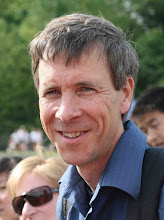
The Greater Boston Track Club men placed fourth at the USATF national club track and field championships this past weekend, and Newton North grads (and GBTC teammates) Dave Cahill and Josh Seeherman were there competing.
Dave ran in both the 4x400 and 4x800 relays. The 4x400 finished second in 3:18.10, while the 4x800 ran 8:20.57 to finish 6th.
Josh competed in the open 800, running 1:59.31, ran a leg on the aforementioned 4x800 relay, and anchored GBTC's sprint medley, which also finished 6th in 3:43.41.
---
Jamie Krieder won the weekly 5M race at Fresh Pond Race on Saturday morning, running 28:25 for the roughly 5M two-loop course.
---
Rumor has it that Dan Chebot jumped in an ran the Utica Boilermaker 15K as a bandit, but as he was unofficial, we'll have to ask him to supply the details.
July 13, 2009
July 09, 2009
Turning Cats Into Tigers
"The long run is what puts the tiger in the cat." - Bill Squires
I have a confession: I don't know why long runs work.
I understand, more or less, the science behind running at various faster paces. I understand the concepts of V02 Max and Lactate threshold, and am happy to reap the benefits of race-pace repetitions. But long runs are still a bit mysterious to me.
When I say long run, I mean a run lasting 90 minutes or more at a relatively modest pace (1 1/2 - 2 minutes per mile slower than 5K race pace, or even slower). When done with a group, long runs are obvious social occasions, and the pace is never so fast that it precludes a good long conversation).
When I'm out of shape, the long run scares me. I make excuses for myself before I've taken my first step, and I struggle to manage 75 minutes, and I need a day or two to recover. As Sundays come and go, I find myself able to manage 90 minutes on a regular basis, and recovery is quicker. And if I'm really motivated (and healthy), and not too distracted by over-racing, I start pushing the long runs up to 1:40, 1:45, 1:50...
...and it is when the long runs start approaching two hours that this amazing thing happens. It's hard to describe, really, because it's a subtle change in how I feel all the time. For one thing, I start looking forward to longer and longer runs; in other words, it's highly addictive. For another thing, I seem to recover more quickly from all my runs, including hard efforts on the track. The effect of a two-hour run once a week seems to be that it drives my metabolism into a new gear where I am always ready to run some more. It's a little spooky, as though my body has decided that it should prepare itself for constant ambulation.
Some of this is psychological, no doubt. There's a powerful sense of accomplishment in running a long way. But what physical changes underlie that psychological strength, I don't know for sure. When asked about it, I'm happy to blather on about capillary growth and mitochondrial enzymes, but really, I don't know what's going on down there at the cellular level.
But I do have some opinions about how to do long runs, based on what has worked for me in the past.
First and foremost, I would do long runs in beautiful places -- on trails, in woods, or along quiet and pleasant roads without a lot of traffic. It's healthy in multiple ways to have something to enjoy besides the sound of your own breathing. Also, in planning a route, it's a good idea to make sure there are water fountains and bathrooms along the way.
Second, I would try to find agreeable training partners who are happy to share a relaxed pace that allows for free conversation.
Third, I would have a goal of increasing the length of your long runs by about 5 minutes every two weeks. In other words, if your longest long run now is 70 minutes, do your next two at 75 minutes, then the next two at 80, and so on.
Fourth, I would not plan anything too important for the rest of the day on a day you are doing a long run. I know that I like to do some walking after a long run to keep my legs moving at least a little bit. The worst thing (for me) is to sit in a car or on an airplane after doing a long run.
Fifth, since doing long runs is likely to fill your mind with feelings of running invincibility, I would urge a certain amount of caution. Like anything else, the benefits of doing long runs come slowly, over the course of many months, if not years. I have to remind myself that I was struggling mightily through 90-minute runs this winter, and it's only now -- six months later -- that I feel like I'm reaping the benefits.
And finally, I realize after writing the paragraph above that long runs are hard to manage for a lot of high school athletes who might compete in three seasons, racing many weekends. On the other hand, summer might be a good time to experiment a little with doing something a little longer than the standard high school 7-8 mile run.
I have a confession: I don't know why long runs work.
I understand, more or less, the science behind running at various faster paces. I understand the concepts of V02 Max and Lactate threshold, and am happy to reap the benefits of race-pace repetitions. But long runs are still a bit mysterious to me.
When I say long run, I mean a run lasting 90 minutes or more at a relatively modest pace (1 1/2 - 2 minutes per mile slower than 5K race pace, or even slower). When done with a group, long runs are obvious social occasions, and the pace is never so fast that it precludes a good long conversation).
When I'm out of shape, the long run scares me. I make excuses for myself before I've taken my first step, and I struggle to manage 75 minutes, and I need a day or two to recover. As Sundays come and go, I find myself able to manage 90 minutes on a regular basis, and recovery is quicker. And if I'm really motivated (and healthy), and not too distracted by over-racing, I start pushing the long runs up to 1:40, 1:45, 1:50...
...and it is when the long runs start approaching two hours that this amazing thing happens. It's hard to describe, really, because it's a subtle change in how I feel all the time. For one thing, I start looking forward to longer and longer runs; in other words, it's highly addictive. For another thing, I seem to recover more quickly from all my runs, including hard efforts on the track. The effect of a two-hour run once a week seems to be that it drives my metabolism into a new gear where I am always ready to run some more. It's a little spooky, as though my body has decided that it should prepare itself for constant ambulation.
Some of this is psychological, no doubt. There's a powerful sense of accomplishment in running a long way. But what physical changes underlie that psychological strength, I don't know for sure. When asked about it, I'm happy to blather on about capillary growth and mitochondrial enzymes, but really, I don't know what's going on down there at the cellular level.
But I do have some opinions about how to do long runs, based on what has worked for me in the past.
First and foremost, I would do long runs in beautiful places -- on trails, in woods, or along quiet and pleasant roads without a lot of traffic. It's healthy in multiple ways to have something to enjoy besides the sound of your own breathing. Also, in planning a route, it's a good idea to make sure there are water fountains and bathrooms along the way.
Second, I would try to find agreeable training partners who are happy to share a relaxed pace that allows for free conversation.
Third, I would have a goal of increasing the length of your long runs by about 5 minutes every two weeks. In other words, if your longest long run now is 70 minutes, do your next two at 75 minutes, then the next two at 80, and so on.
Fourth, I would not plan anything too important for the rest of the day on a day you are doing a long run. I know that I like to do some walking after a long run to keep my legs moving at least a little bit. The worst thing (for me) is to sit in a car or on an airplane after doing a long run.
Fifth, since doing long runs is likely to fill your mind with feelings of running invincibility, I would urge a certain amount of caution. Like anything else, the benefits of doing long runs come slowly, over the course of many months, if not years. I have to remind myself that I was struggling mightily through 90-minute runs this winter, and it's only now -- six months later -- that I feel like I'm reaping the benefits.
And finally, I realize after writing the paragraph above that long runs are hard to manage for a lot of high school athletes who might compete in three seasons, racing many weekends. On the other hand, summer might be a good time to experiment a little with doing something a little longer than the standard high school 7-8 mile run.
July 08, 2009
Usain Insane in the Rain
Last night in Lausanne, Switzerland, Usain Bolt reminded everyone why he is the "God of sprinting."
In a 200m race that included the defending 200m Olympic Silver medalist (Shawn Crawford), the defending 400m Gold medalist (LaShawn Merritt), and at least one other Olympic finalist, Usain Bolt washed them all away like a mighty flood. Running in a steady rain and into a 0.9 m/s headwind, Bolt ran 19.59 -- the fourth fastest wind-legal time in history.
Hi margin of victory was an astounding 0.82s over Merritt (20.41), who won the race for first mortal sprinter. How do the other runners prepare for a race against Bolt, when they view a race like this?
Results:
1. Usain Bolt 19.59
2. LaShawn Merritt 20.41
3. Churandy Martina 20.76
4. Shawn Crawford 20.80
5. Brendan Christian 20.85
6. Christophe LeMaitre 21.01
7. Stephan Buckland 21.30
In a 200m race that included the defending 200m Olympic Silver medalist (Shawn Crawford), the defending 400m Gold medalist (LaShawn Merritt), and at least one other Olympic finalist, Usain Bolt washed them all away like a mighty flood. Running in a steady rain and into a 0.9 m/s headwind, Bolt ran 19.59 -- the fourth fastest wind-legal time in history.
Hi margin of victory was an astounding 0.82s over Merritt (20.41), who won the race for first mortal sprinter. How do the other runners prepare for a race against Bolt, when they view a race like this?
Results:
1. Usain Bolt 19.59
2. LaShawn Merritt 20.41
3. Churandy Martina 20.76
4. Shawn Crawford 20.80
5. Brendan Christian 20.85
6. Christophe LeMaitre 21.01
7. Stephan Buckland 21.30
July 07, 2009
Mile Record Turns Ten
It has been ten years since we've seen a new open world record in the one mile run.
Ten years ago today, on July 7 1999 in Rome, Morocco's Hicham El Guerrouj ran one mile in 3:43.13, breaking Nourredine Mourceli's world record. El Guerrouj, considered by many to be the greatest middle distance runner of all time, was chased to the line by Kenya's Noah Ngeny, who ran 3:43.40, a time that was also well under the old record. There's no doubt that the competition between the two in the final stretch helped both men eke out every last hundredth of a second.
3:43.13 and 3:43.40 are still the top two mile times in history, the only times under 3:44. After that race, El Guerrouj never ran within 1.5 seconds of his record. No other runner since has come within 3 seconds of it. Here's a video of the race -- well worth watching over and over...
Most people believe that eventually someone will run faster... eventually, but when? The mile record has never lasted this long before, at least not since there has been an international sanctioning body for track and field.
Has the record lasted so long because the mile isn't run as often as the 1500m? That might explain why the current 1500m record (El Guerrouj's 3:26.00 from 1998) is superior to the current mile record, but the all-time list for the 1500 shows that no one since 2004 has run under 3:29. Basically, no one has been close to the record in the last five years.
Is the record tainted by some still hidden drug scandal? I find that more than a little hard to believe... El Guerrouj was the best miler/1500m runner in the world for over 8 years. And other than Ngeny and, later, Bernard Lagat, no one was even close to El Guerrouj.
I think that the record was put "way out there" because El Guerrouj was truly ahead of his time in talent -- maybe in twenty years we'll see dozens of people running under 3:44 for the mile, but it will take a while for the world to catch up with the Moroccan. And also, that race for the line was magic. I've tried to figure when have two men both run faster than the existing mile world record in a single race? I can't think of a time, although I can imagine it happened at some point.
By the way, the women's world record for the mile is in a similar state of stasis. The current women’s record is 4:12.56 by Svetlana Masterkova of Russia, set on August 14, 1996. The #2 time is over three seconds slower, and was set in 1989.
In the case of the women's record, I think two things are different: first, there ARE fewer one mile runs at major competitions. Second, seven of the top ten times were run by athletes from The Soviet Union, Russia, or Romania from the mid 1980s to mid 1990s. I'm not saying that Eastern European countries were the only ones with doping issues, but I do -- sadly -- discount many of the times run in that era.
So back to the anniversary of the El Guerrouj - Ngeny Dual in Rome: will we see anything similar in the near future, or will we wait another 10 years for someone to go under 3:43?
One hopeful sign that we might not have to endure without a new record for so long was the performance of Asbel Kiprop at the Prefontaine Classic in June of this year. Kiprop won the Bowerman mile, running 3:48.50. In the final 100m he crossed himself twice, raised his hands over his head to clap to the crowd, crossed himself again, and wagged his finger, all while looking like he was strolling through an easy strider. He looked entirely untroubled by the effort.
Now we just need someone who can push him all the way to the line.
Ten years ago today, on July 7 1999 in Rome, Morocco's Hicham El Guerrouj ran one mile in 3:43.13, breaking Nourredine Mourceli's world record. El Guerrouj, considered by many to be the greatest middle distance runner of all time, was chased to the line by Kenya's Noah Ngeny, who ran 3:43.40, a time that was also well under the old record. There's no doubt that the competition between the two in the final stretch helped both men eke out every last hundredth of a second.
3:43.13 and 3:43.40 are still the top two mile times in history, the only times under 3:44. After that race, El Guerrouj never ran within 1.5 seconds of his record. No other runner since has come within 3 seconds of it. Here's a video of the race -- well worth watching over and over...
Most people believe that eventually someone will run faster... eventually, but when? The mile record has never lasted this long before, at least not since there has been an international sanctioning body for track and field.
Has the record lasted so long because the mile isn't run as often as the 1500m? That might explain why the current 1500m record (El Guerrouj's 3:26.00 from 1998) is superior to the current mile record, but the all-time list for the 1500 shows that no one since 2004 has run under 3:29. Basically, no one has been close to the record in the last five years.
Is the record tainted by some still hidden drug scandal? I find that more than a little hard to believe... El Guerrouj was the best miler/1500m runner in the world for over 8 years. And other than Ngeny and, later, Bernard Lagat, no one was even close to El Guerrouj.
I think that the record was put "way out there" because El Guerrouj was truly ahead of his time in talent -- maybe in twenty years we'll see dozens of people running under 3:44 for the mile, but it will take a while for the world to catch up with the Moroccan. And also, that race for the line was magic. I've tried to figure when have two men both run faster than the existing mile world record in a single race? I can't think of a time, although I can imagine it happened at some point.
By the way, the women's world record for the mile is in a similar state of stasis. The current women’s record is 4:12.56 by Svetlana Masterkova of Russia, set on August 14, 1996. The #2 time is over three seconds slower, and was set in 1989.
In the case of the women's record, I think two things are different: first, there ARE fewer one mile runs at major competitions. Second, seven of the top ten times were run by athletes from The Soviet Union, Russia, or Romania from the mid 1980s to mid 1990s. I'm not saying that Eastern European countries were the only ones with doping issues, but I do -- sadly -- discount many of the times run in that era.
So back to the anniversary of the El Guerrouj - Ngeny Dual in Rome: will we see anything similar in the near future, or will we wait another 10 years for someone to go under 3:43?
One hopeful sign that we might not have to endure without a new record for so long was the performance of Asbel Kiprop at the Prefontaine Classic in June of this year. Kiprop won the Bowerman mile, running 3:48.50. In the final 100m he crossed himself twice, raised his hands over his head to clap to the crowd, crossed himself again, and wagged his finger, all while looking like he was strolling through an easy strider. He looked entirely untroubled by the effort.
Now we just need someone who can push him all the way to the line.
July 05, 2009
An Evening of Mile Races July 18th in Concord
Feel like running a fast summer mile?
The Concord-Carlisle XC and T&F teams are holding a fundraiser race on Saturday July 18th, consisting of a series of mile races. These include boys and girls races for 11-12 years old, 13-14, 15-16, and 17-18. It also includes an open category (19-39), and masters category (40+). All proceeds to benefit the Adrian Martinez Scholarship at Concord-Carlisle High School & The Concord-Carlisle T&F / Cross Country Teams.
The miles will be raced on the Track at Emerson Field, located at Everett and Thoreau Streets, Concord MA.
Schedule of Events:
5:00 PM: 11-12 Miles; 13-14 Miles
5:35 PM: 10-under Mini Mile
5:45 PM: First Timer's Mile
6:00 PM: Open Miles (age 19-39); Master's Miles
6:45 PM: The Adro "Elite" Mile
7:00 PM: 15-16 Miles
7:20 PM: 17-18 Miles & Scholastic Challenge
(note schedule may change slightly, depending on entries. Race director will notify by email before race day)
There will be prizes for the top 3 in each category. There is also an elite category, and serious prizes for any man who runs sub 4:10 or woman who runs sub 4:55.
The scholastic challenge is a team category for high school students (team members must be from the same town and must be attending high school in the fall).
Online registration and more info is here:
https://www.signmeup.com/site/reg/register.aspx?fid=DB2V5K7
The Concord-Carlisle XC and T&F teams are holding a fundraiser race on Saturday July 18th, consisting of a series of mile races. These include boys and girls races for 11-12 years old, 13-14, 15-16, and 17-18. It also includes an open category (19-39), and masters category (40+). All proceeds to benefit the Adrian Martinez Scholarship at Concord-Carlisle High School & The Concord-Carlisle T&F / Cross Country Teams.
The miles will be raced on the Track at Emerson Field, located at Everett and Thoreau Streets, Concord MA.
Schedule of Events:
5:00 PM: 11-12 Miles; 13-14 Miles
5:35 PM: 10-under Mini Mile
5:45 PM: First Timer's Mile
6:00 PM: Open Miles (age 19-39); Master's Miles
6:45 PM: The Adro "Elite" Mile
7:00 PM: 15-16 Miles
7:20 PM: 17-18 Miles & Scholastic Challenge
(note schedule may change slightly, depending on entries. Race director will notify by email before race day)
There will be prizes for the top 3 in each category. There is also an elite category, and serious prizes for any man who runs sub 4:10 or woman who runs sub 4:55.
The scholastic challenge is a team category for high school students (team members must be from the same town and must be attending high school in the fall).
Online registration and more info is here:
https://www.signmeup.com/site/reg/register.aspx?fid=DB2V5K7
July 03, 2009
Dream Mile Tonight (Today) in Oslo
One of the most famous track meets in the world, the Bislett Games, takes place this evening (local time) in Oslo, Norway. The meet features what is annually billed as the "Dream Mile" with many of the top middle distance runners in the world.
This year the buzz centers around Kenya's Augustine Kiprono Choge, who ran 3:29.47 for 1500m in Berlin earlier this year, best in the world for 2009.
You can watch the dream mile live on Universal Sports.Com at 2 p.m. Eastern time.
Here's the start list for the race:
Cliff Bargar
Mike Burnstein
Matias Carrasco
Dan Chebot
Scott Cole
Sam Donovan
Ben Finch
Noah Jampol
Alex Long
...
Oops, my bad, those guys are just a few of the NSRP regulars who meet at Cold Spring Park on Mondays and Wednesdays (meet at 6:15, run at 6:30). It WOULD be a sweet mile, though, wouldn't it?
Here's the real start list for the Bislett meet:
Henok Legesse, Ethiopia
Tarek Boukensa, Algeria
Nathan Brannen, Canada
Philemon Kipkorir Kimutai, Kenya
Vickson Naran Polonet, Kenya
Mohammed Shaween, Saudi Arabia
Jeffrey Riseley, Australia
Augustine Kiprono Choge, Kenya
Deresse Mekonnen, Ethiopia
Mekonnen Gebremedhin, Ethiopia
Nicholas Kiptanui Kemboi, Kenya
William Biwott Tanui, Kenya
This year the buzz centers around Kenya's Augustine Kiprono Choge, who ran 3:29.47 for 1500m in Berlin earlier this year, best in the world for 2009.
You can watch the dream mile live on Universal Sports.Com at 2 p.m. Eastern time.
Here's the start list for the race:
Cliff Bargar
Mike Burnstein
Matias Carrasco
Dan Chebot
Scott Cole
Sam Donovan
Ben Finch
Noah Jampol
Alex Long
...
Oops, my bad, those guys are just a few of the NSRP regulars who meet at Cold Spring Park on Mondays and Wednesdays (meet at 6:15, run at 6:30). It WOULD be a sweet mile, though, wouldn't it?
Here's the real start list for the Bislett meet:
Henok Legesse, Ethiopia
Tarek Boukensa, Algeria
Nathan Brannen, Canada
Philemon Kipkorir Kimutai, Kenya
Vickson Naran Polonet, Kenya
Mohammed Shaween, Saudi Arabia
Jeffrey Riseley, Australia
Augustine Kiprono Choge, Kenya
Deresse Mekonnen, Ethiopia
Mekonnen Gebremedhin, Ethiopia
Nicholas Kiptanui Kemboi, Kenya
William Biwott Tanui, Kenya
July 02, 2009
Feeling Good... and Other Perils of Training
A couple of times in the last few weeks, I have jokingly observed to my running companions that the key to successful training is to avoid feeling too good. It's when you feel really good, really fit, that you make the most egregious training mistakes.
Well, perhaps that's overstating things a bit. But I have certainly noticed with myself that feeling good is like being slightly intoxicated. it feels like you can do ANYTHING and get away with it. Run back-o-back races on a Saturday and Sunday? Sure, why not... Run 80 miles a week instead of 60? Hey, I was feeling fine... It's like the old joke about the optimist who falls off the 80-story skyscraper; as he passes the 50th floor he says "so far, so good!"
There's something to be said for being a little fatigued, a little subdued in your approach to the daily running task. I have found that good training is a little boring -- the same damn thing over and over, week after week without high highs or low lows. A stretch of this kind of training is not without its satisfactions, as you realize that gradually and without fanfare, you are logging a lot of good miles, and making it all feel routine.
And there ARE highlights, but not necessarily performance-related. There is the long run with friends that feels easy and satisfying, the run in the rain that goes really well and puts a smile on your face in spite of the outside gloom. There is the social life -- and the chance to talk while out for yet another 7-8 mile run.
Maybe this kind of mood isn't conducive for the peak of a racing season, but that's ok. When you're racing, you are so neurotic about being ready to run your best on one day that it keeps you from doing stupid things on the days leading up to the race. It's ok to feel good as you gather up your energy for the big event. But without races to enforce some kind of restraint, feeling good is a temptation that few of us can resist.
So I ran with all the NSRP folks at Cold Springs last night -- a pretty quick run (for me, not for them), and I felt pretty good. And I feel pretty good this morning.
I think I'd better stay in bed until the feeling passes.
Well, perhaps that's overstating things a bit. But I have certainly noticed with myself that feeling good is like being slightly intoxicated. it feels like you can do ANYTHING and get away with it. Run back-o-back races on a Saturday and Sunday? Sure, why not... Run 80 miles a week instead of 60? Hey, I was feeling fine... It's like the old joke about the optimist who falls off the 80-story skyscraper; as he passes the 50th floor he says "so far, so good!"
There's something to be said for being a little fatigued, a little subdued in your approach to the daily running task. I have found that good training is a little boring -- the same damn thing over and over, week after week without high highs or low lows. A stretch of this kind of training is not without its satisfactions, as you realize that gradually and without fanfare, you are logging a lot of good miles, and making it all feel routine.
And there ARE highlights, but not necessarily performance-related. There is the long run with friends that feels easy and satisfying, the run in the rain that goes really well and puts a smile on your face in spite of the outside gloom. There is the social life -- and the chance to talk while out for yet another 7-8 mile run.
Maybe this kind of mood isn't conducive for the peak of a racing season, but that's ok. When you're racing, you are so neurotic about being ready to run your best on one day that it keeps you from doing stupid things on the days leading up to the race. It's ok to feel good as you gather up your energy for the big event. But without races to enforce some kind of restraint, feeling good is a temptation that few of us can resist.
So I ran with all the NSRP folks at Cold Springs last night -- a pretty quick run (for me, not for them), and I felt pretty good. And I feel pretty good this morning.
I think I'd better stay in bed until the feeling passes.
Subscribe to:
Posts (Atom)