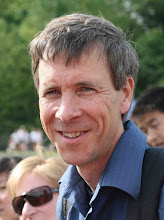
I coach an athlete -- a sprinter -- who has been reluctant to enter any track meets this winter -- even low-key, all-comers meets -- because she feels unprepared for competing in a "real" meet. Being a nice, sympathetic coach, I direct most of my efforts at helping her feel more confident. However, I also find myself selling the idea of competing, even when under-prepared, as a learning process. In that spirit, the other day I told her, "Every time you compete, you learn something. Running a race, getting a mark or a time, is like having a good friend who'll tell you the truth about important things when no one else will."
I felt like a hypocrite.
The truth in my case is that for far too long I've been reluctant to race on the track because the idea of running fast had become a mental obstacle for me. The thing is, it has been nearly two years since I last put on my spikes and heard the starter say "on your marks." In that time, I've lost touch with speed and definitely lost the "edge" that you get when you race middle distances. Being older, I never lacked for reasons and excuses to avoid the more intense races, but even when healthy, I never could seem to motivate myself to start working on speed again. It was much easier to keep running slow mileage and lots of it and postpone my rendezvous with the track to the next season... and the next... and the next.
With the year winding down, I felt like it was time to take my own advice and get back to racing. Maybe the result wouldn't be a pleasing one, maybe my ego would take a little bruising, but it was time to find out where I stood. If I ran poorly, I would be motivated to train better, and I believe that whether you're 15 or 50, it's still all about the training.
So I entered the third and final BU Mini-Meet, signing up for the 3000m. The BU meets are low key, with plenty of heats for "sub-elite" (the old, the lame, the infirm...). But here was my first problem: I didn't know how to seed myself. I didn't want to be last in a fast heat (Oh, the vanity! We never want to finish last...), but I knew that I would run better if I was in a heat with a lot of people running my pace. I finally settled on the roundest number I could think of, 10 minutes even, or 40s per lap. Immediately after sending in my entry by email, it occurred to me to plug my most recent 5K time into a race prediction calculator to see what IT thought was realistic 3K time for me. The answer came back: 10:23. Terrific.
Arriving at BU on Saturday morning, I was surprised how nervous I was. Somehow the concept of "low-key meet" had been replaced in my brain by "life or death struggle to maintain the last shreds of self-esteem as a runner." Well, I told myself, no one else will notice or care whether you run well or poorly... Relax, you're anonymous here... No pressure...
At that moment, I ran into Chris Barnicle and Paul Norton. Both of them were running the 3k. Chris had recently returned from Iten, Kenya, where he had been training with world-class runners. A couple of years ago, Paul had also spent significant time training in Iten, so they spent a few minutes chatting, sharing stories and impressions of the experience. Chris mentioned that he had really learned the value of running long runs at a hard pace, for example, 3:20 per kilometer for 30-35k. After a few minutes more of such talk, the subject turned back to the meet, and Chris politely asked about my goals for the race. I told them I wanted to break 10:00 --- 3:20 per kilometer, or Chris' new long run pace.
There were a lot of people entered in the 3k. Chris and Paul were in the first heat (of six total) and I was in the fifth. So I got to watch Chris take the race from the gun and rip off a 60s opening 400 before settling into a rhythm of 32s per lap. He finished in 8:00.82, lapping several runners in the process. It was very impressive, even though I guessed he wouldn't be happy to be on the wrong side of 8:00. In any case, watching such a fast race made me feel very slow, indeed.
In the third heat, Newton North Asst. Coach Sean Wallace used a great move in the final 600m to win n a time of 8:55. "Everyone is fast," I thought, "except me."
Finally, it was time for the fifth heat. Standing on the track with the other 15 runners, I remembered how I hated those last few moments before the start. Better to make the mind go blank, or focus on responding to the first command with two small, patient steps to the line. Then, after a second that seems like a minute, the gun, and the end of all that terrible anticipation.
I got off the line quickly and settled immediately in fourth place around the first turn. My goal was to run 40s per lap. Simple. In theory, there were only a few people in this race who would average better than that. However after we passed first 200 in 39, about 3-4 runners behind me decided the pace was too slow and passed me. 400 in 79 and the crowd in front opened up a little gap. My friend Joe yelled at me to let the pack pull me along, but I wasn't budging from my pace. Let the pack come back to me.
I passed 1k in about 3:19 in about the same position, and then, sure enough, people started coming back. I almost tripped someone clipping their heel from behind, someone almost tripped me in the same way. We had bunched up, which meant that the pace was going to slow down, so I ran wide for 100 meters and improved my position a little bit. 1600 in 5:19, 2k in 6:38. Just run 40s laps.
Through the middle part of the race, I was really surprised at how, despite running evenly, I didn't feel good at all. After the race it didn't seem like a mystery. I was running at a pace that I rarely run in practice. I was NOT prepared to feel relaxed and efficient at this pace, but I was also just fit enough to keep it going. In other words, I was in good enough shape to make this really hurt.
Still running very close to 40 per lap, I started moving up. My mouth was very dry, and I knew from previous experience how my lungs would hurt after I finished. With five laps to go, I started thinking that maybe I could go a little faster if I had to. With 3 laps to go, I picked up the pace just a little to go around another runner. With 2 laps to go I was pretty sure I could break 10:00 after all if I didn't die first. With one lap to go, I threw what was left into the effort and passed one more person, moving up into 3rd on the final turn. The last 40 meters were pretty ugly, but I pushed hard through the line and held my place. Final time: 9:55.64.
On the plus side, I raced. Although my lungs hurt all day, and my legs felt like they had been in a street fight, but it was exhilarating to be racing people. In my heat, seven runners finished within five seconds. That kick mattered!
On the plus side, a bunch of Newton North alums showed up, including Dan, Jesse, and Ben Chebot, Evan Morse, and Chris, of course. It was great to have them yelling as I tried to finish what I had started.
On the plus side, I ran faster than I expected, and on the plus side, there's no reason for Speed and I not to become better acquainted again.
On the minus side, well, it hurt! I'm telling you, getting older, running slower, it doesn't matter, you can still make yourself suffer.
Other meet notes:
- NNHS alum John Blouin competed in the mile, running 4:50.13.
- Peabody senior Nick Christensen ran a huge PR in the mile, coming from behind to win the seeded heat in a time of 4:12.56. According to DyeStat, that is the #2 HS time in the country so far this season.
- Kara Haas set an American age-group record for women 40-44 in the 3K, running 9:50.16, breaking the old record of 9:51.60.
- There was a 4 x 1600m relay at the end of the meet. The Whirlaway Racing Team destroyed the listed world record for men 50+, running 19:17.61, but I didn't stick around long enough to see it. Liberty AC set the Over-60 women's world best with 28:57.57. Brookline had a team in the relay, as did a college team with Brookline alums Mike Burnstein and Jerzy Eisenberg-Guyot. I was rooting for a tie.
- I saw a bunch of kids with Newton North singlets, but I didn't recognize them and I don't know what they ran. Maybe the relay?
January 01, 2012

December 23, 2011
Ryan Lucken (36.12) Chases History
Winter began on Thursday, December 22nd, but unseasonably warm and mild weather made it feel more like a day for outdoor track than for the rush-hour pandemonium of indoor action at the Reggie Lewis Center. Be that as it may, Newton North's boys and girls teams busied themselves once again with being faster, stronger and deeper than their opponents, on this evening Framingham, and with winning their meets easily.
In the girls meet, NN hogged all but three of the points, yielding only a single second-place finish in the 600. Carla Forbes won two events (55 and LJ) and finished second in two others (55 hurdles and HJ). Kayla Wong won the hurdles and finished second in the 55. Maggie Heffernan won the 2M, Sarah Perlo the 1M, Miller McCarthey-Tuohy the 1000, Meghan Bellerose the 600, Madi Nadeau the 300, Michaela Salvucci the SP, and Lucia Grigoli the HJ.
On the boys side, NN's top three shot putters came within six inches of averaging 50 feet, with Swardiq Mayanja winning it at 53-2. In a great race, Framingham's Ben Groleau out-duelled Justin Keefe in the mile, running 4:25.25 to Keefe's 4:27.81.
Perhaps the performer of the night was NN junior Ryan Lucken, who won the 55 (6.97) and the 300 (in a personal best 36.12). Lucken also won the 300 at last Sunday's Winterfest meet, and is making his way up the school's all-time list in the lap-and-a-half race.
NNHS historian Josh Seeherman notes that Lucken is now the sixth fastest 300 runner in school history. Here's Josh's NHS/NNHS 300 All-Time List:
Dan King remains the only NNHS runner to go under 35 seconds for 300 meters. It's still astonishing to think that King was more than a half second faster than Isaiah Penn's best time at that distance.
Five of the other top ten marks are converted from hand times over 300 yards, and some date back many decades. Josh notes that John Head ran 33.0yh in 1957 to win the Class A meet, where he tied the record held by Somerville's Jimmy Blackburn (remember him?) from the previous year. Head's race was at the Boston Garden on a wooden 160 yard portable track with four turns instead of three.
The runner just ahead of Lucken on the all-time list, Frank Hines, held the record for over 40 years.
Bay State Meet #2 Results
In the girls meet, NN hogged all but three of the points, yielding only a single second-place finish in the 600. Carla Forbes won two events (55 and LJ) and finished second in two others (55 hurdles and HJ). Kayla Wong won the hurdles and finished second in the 55. Maggie Heffernan won the 2M, Sarah Perlo the 1M, Miller McCarthey-Tuohy the 1000, Meghan Bellerose the 600, Madi Nadeau the 300, Michaela Salvucci the SP, and Lucia Grigoli the HJ.
On the boys side, NN's top three shot putters came within six inches of averaging 50 feet, with Swardiq Mayanja winning it at 53-2. In a great race, Framingham's Ben Groleau out-duelled Justin Keefe in the mile, running 4:25.25 to Keefe's 4:27.81.
Perhaps the performer of the night was NN junior Ryan Lucken, who won the 55 (6.97) and the 300 (in a personal best 36.12). Lucken also won the 300 at last Sunday's Winterfest meet, and is making his way up the school's all-time list in the lap-and-a-half race.
NNHS historian Josh Seeherman notes that Lucken is now the sixth fastest 300 runner in school history. Here's Josh's NHS/NNHS 300 All-Time List:
1. Dan King            2002   34.93
2. Sean Herlehy        2001   35.34+ (35.1h)
3. Dave Gates          1985   35.48+ (32.2yh)
4. Isaiah Penn         2011   35.58
5. Frank Hines         1938   35.91+ (32.6yh)
6. Ryan Lucken         2011   36.12
7. John Head           1957   36.35+ (33.0yh)
8. Matt Milner         1982   36.46+ (33.1yh)
9. Allen Boyer         1971   36.57+ (33.2yh)
10. Avery Mitchell     2007   36.74
Dan King remains the only NNHS runner to go under 35 seconds for 300 meters. It's still astonishing to think that King was more than a half second faster than Isaiah Penn's best time at that distance.
Five of the other top ten marks are converted from hand times over 300 yards, and some date back many decades. Josh notes that John Head ran 33.0yh in 1957 to win the Class A meet, where he tied the record held by Somerville's Jimmy Blackburn (remember him?) from the previous year. Head's race was at the Boston Garden on a wooden 160 yard portable track with four turns instead of three.
The runner just ahead of Lucken on the all-time list, Frank Hines, held the record for over 40 years.
Bay State Meet #2 Results
December 21, 2011
Yes, Virginia, There IS an Indoor Track Program
"DEAR EDITOR: I am 17 years old and I attend Concord Academy. My friends say there is nothing to do after cross-country except play intramural basketball and write college applications, and there's no such thing as "indoor" track. My coach says we can keep running outside, and doing drills in the hallways, and strength and core in the weight room, and if we believe in it hard enough, we can even run races in places like Harvard and BU and Roxbury. PLEASE tell me the truth; is there an Indoor Track season?"
- Virginia O'Hanlon, CA Class of '2012
VIRGINIA, your friends are wrong. They have been affected by the skepticism of a skeptical age. They do not believe in what they do not see. They think that nothing can be which is not described in the CA course catalog. All course catalogs, Virginia, whether they be CA's or some great university's, are the product of convention and previous experience. In this great universe of ours, course catalogs don't even begin to capture the possibilities of sport.
Yes, VIRGINIA, there is an Indoor Track Season. It exists as certainly as strength and speed and endurance exist, and you know that they abound and give to your afternoons their highest beauty and joy. Alas! how dreary would be the winter world if there were no Indoor Track. It would be as dreary as if there were no VIRGINIAS. There would be no burning light of aspiration to break 13 in the 100, no dedication to come to practice on Saturday mornings in the hopes of running faster, jumping higher, or throwing further, no controlled chaos of indoor meets to make tolerable this cold and dark time of year. We should have no enjoyment, except in watching football on TV. The eternal light with which the competitive fire of young people fills the world would be extinguished.
Not believe in Indoor Track! You might as well not believe in winter running! Sure, you could get the maintenance man to inspect the campus to see if there are any facilities for practicing hurdles, solid floor for putting shots, or mats and pits for the high and long jumps. But even if the maintenance man found nothing but a few unused hallways and a tiny weight room, what would that prove? Nobody sees an indoor track on campus, but that is no sign that there is no Indoor Track. The most real things in the world are those that neither athletes not coaches can see. Did you ever see the invisible lift that helps a triple jumper set a PR by two feet in a championship meet -- the sudden revelation that follows months of patient effort in the weight room and on the runway? Of course not, but that's no proof that it isn't there. Nobody can conceive or imagine all the wonders there are unseen and unseeable in the soul of an athlete.
You may biopsy the muscle and see what makes it contract with such force, but there is a veil covering the unseen world of athletic aspiration which not the strongest man, nor even the united strength of all the strongest men that ever lived, could tear apart. Only faith, dedication, and training can push aside that curtain and view and picture the beauty and glory beyond. Is it all real? Ah, VIRGINIA, in all this world there is nothing else real and abiding.
No Indoor Track! Thank God! It lives, and it lives forever. A thousand years from now, Virginia, nay, ten times ten thousand years from now, indoor track will continue to inspire the strong and rapid beat of the hearts of athletes everywhere.
- Virginia O'Hanlon, CA Class of '2012
VIRGINIA, your friends are wrong. They have been affected by the skepticism of a skeptical age. They do not believe in what they do not see. They think that nothing can be which is not described in the CA course catalog. All course catalogs, Virginia, whether they be CA's or some great university's, are the product of convention and previous experience. In this great universe of ours, course catalogs don't even begin to capture the possibilities of sport.
Yes, VIRGINIA, there is an Indoor Track Season. It exists as certainly as strength and speed and endurance exist, and you know that they abound and give to your afternoons their highest beauty and joy. Alas! how dreary would be the winter world if there were no Indoor Track. It would be as dreary as if there were no VIRGINIAS. There would be no burning light of aspiration to break 13 in the 100, no dedication to come to practice on Saturday mornings in the hopes of running faster, jumping higher, or throwing further, no controlled chaos of indoor meets to make tolerable this cold and dark time of year. We should have no enjoyment, except in watching football on TV. The eternal light with which the competitive fire of young people fills the world would be extinguished.
Not believe in Indoor Track! You might as well not believe in winter running! Sure, you could get the maintenance man to inspect the campus to see if there are any facilities for practicing hurdles, solid floor for putting shots, or mats and pits for the high and long jumps. But even if the maintenance man found nothing but a few unused hallways and a tiny weight room, what would that prove? Nobody sees an indoor track on campus, but that is no sign that there is no Indoor Track. The most real things in the world are those that neither athletes not coaches can see. Did you ever see the invisible lift that helps a triple jumper set a PR by two feet in a championship meet -- the sudden revelation that follows months of patient effort in the weight room and on the runway? Of course not, but that's no proof that it isn't there. Nobody can conceive or imagine all the wonders there are unseen and unseeable in the soul of an athlete.
You may biopsy the muscle and see what makes it contract with such force, but there is a veil covering the unseen world of athletic aspiration which not the strongest man, nor even the united strength of all the strongest men that ever lived, could tear apart. Only faith, dedication, and training can push aside that curtain and view and picture the beauty and glory beyond. Is it all real? Ah, VIRGINIA, in all this world there is nothing else real and abiding.
No Indoor Track! Thank God! It lives, and it lives forever. A thousand years from now, Virginia, nay, ten times ten thousand years from now, indoor track will continue to inspire the strong and rapid beat of the hearts of athletes everywhere.
December 16, 2011
Bay State Meet #1 - 12/15/11
From afar, I check out the results online of Bay State Meet #1 and am not surprised at the times and places and points piling up for Newton North.
The first name I see is that of Justin Keefe, perhaps the first winner of the season, ripping off a 4:37 mile in his indoor track opener. Gabe Montague and Jon Long, 2:45 and 2:52 in the 1000; Dan Swain (do I know him?) 1:28.92 in the 600; Ryan Lucken 36.59 (36.59!!) in the 300, Nick Fofana in a trio of events, a phalanx of shot putters led by Swardiq Mayanja at 52 feet, and so it goes. In my mind, I start playing the game of trying to project what those times will be after a season of dual meets, invitationals, relays, and facing better and better competition. Five (or is it six?) years away from the team and I still feel confident that Keefe will be running 4:20-22 at States, that everyone will get faster...
I click on the link to see the girls results, and all those sprinter times look incredibly fast for a first meet. I know I shouldn't think it -- wouldn't think it if I were a coach and not a distant fan -- but who will beat this team? Kayla Wong, Carla Forbes, Meghan Bellerose, Evie and Maggie Heffernan, Lucia Grigoli, Madi Nadeau, and all of those freshmen and sophomores who will be developing under Joe Tranchita's program.
The Boys and Girls won their meets over Braintree with identical scores of 82-13. It's early, and Braintree isn't the strongest opponent in the BSL, but this first meet didn't serve up much hope for the rest of the league.
Results - Bay State Meet #1 - 12/15/11
[Note: I know that some of my readers (well, Kevin...) will groan at seeing H.S. meet results again, and others will complain if I don't write detailed previews of every meet. As always, I write when I feel like I have something to say and time to say it properly. I wish I had more of both, but there you go. And yes, I am hoping to use the holiday break from work to write more about Tanzania.]
The first name I see is that of Justin Keefe, perhaps the first winner of the season, ripping off a 4:37 mile in his indoor track opener. Gabe Montague and Jon Long, 2:45 and 2:52 in the 1000; Dan Swain (do I know him?) 1:28.92 in the 600; Ryan Lucken 36.59 (36.59!!) in the 300, Nick Fofana in a trio of events, a phalanx of shot putters led by Swardiq Mayanja at 52 feet, and so it goes. In my mind, I start playing the game of trying to project what those times will be after a season of dual meets, invitationals, relays, and facing better and better competition. Five (or is it six?) years away from the team and I still feel confident that Keefe will be running 4:20-22 at States, that everyone will get faster...
I click on the link to see the girls results, and all those sprinter times look incredibly fast for a first meet. I know I shouldn't think it -- wouldn't think it if I were a coach and not a distant fan -- but who will beat this team? Kayla Wong, Carla Forbes, Meghan Bellerose, Evie and Maggie Heffernan, Lucia Grigoli, Madi Nadeau, and all of those freshmen and sophomores who will be developing under Joe Tranchita's program.
The Boys and Girls won their meets over Braintree with identical scores of 82-13. It's early, and Braintree isn't the strongest opponent in the BSL, but this first meet didn't serve up much hope for the rest of the league.
Results - Bay State Meet #1 - 12/15/11
[Note: I know that some of my readers (well, Kevin...) will groan at seeing H.S. meet results again, and others will complain if I don't write detailed previews of every meet. As always, I write when I feel like I have something to say and time to say it properly. I wish I had more of both, but there you go. And yes, I am hoping to use the holiday break from work to write more about Tanzania.]
November 27, 2011
NXN: H-W Girls Win; Pembroke Boys 2nd
FLNE: Hubbard, Green, Allen, Rocha Qualify for San Diego
Monday marks the beginning of indoor track for Massachusetts high schools, but for a few runners, indoor will have to wait a bit longer while the cross-country season continues.
Nike Cross-Country National Qualifying Meets
The NXN Northeast and New York Regionals were held at Bowdoin Park in Wappinger Falls, NY, on Saturday.
Hamilton-Wenham, only the runner-up a week ago to Bishop Feehen in Mass. Div 2, won the Northeast Regional outright and qualified for the National Meet. Although their top runner was only 27th overall, H-W placed all of their five scorers in the top 60 and that was plenty good enough to hold off runner-up Champlain Valley (VT) and a surprising performance from Weston (MA) in third. It was an unlucky day for Feehan, as the Shamrocks placed only 8th after a blanket finish from teams 2-7. Incredibly, Feehen was only 28 points from 2nd place and an automatic qualifying spot.
In the boys race, Pembroke, the OTHER runner-up from Mass. Div 2, followed their near miss from a week ago with a strong second-place finish here, earning themselves guaranteed tickets to Portland. The Titans benefited from outstanding runs by Wesley Gallagher (3rd overall) and Christian Stafford (12th overall), and a comeback performance from Joe Vercollone, who finished fourth for his team and 32nd overall in 16:55, a full minute faster than he ran at Franklin Park a week ago.
Other Mass. teams scoring well included Div I champs Brookline in 9th place, and Div 2 champs Bishop Feehen in 10th. Apparently winning a team title in the State Meet is bad luck for doing well here.
NXN Northeast Regionals Results
Footlocker Northeast Regionals
Saturday was also the day of the Footlocker Regional Meets, with the Northeast regional meet held at Sunken Meadows State Park on Long Island.
In the seeded boys race, Newark's Edward Cheserek ran 15:20.5 to win and break John Gregorek's thirty-year-old course record. Meanwhile, three Massachusetts runners finished in the top ten to qualify for the National Finals in San Diego. Marshfield's Joel Hubbard (15:49.9) placed 4th, St. John's Jonathan Green (15:52.5) placed 7th, and King Philip's Chris Allen (16:03.9) placed 10th to claim the last spot.
Amazingly, the next two runners were also from Massachusetts -- Marshfield's Kevin Thomas and Wakefield's Stephen Robertson placed 11th and 12th -- and the Bay State won it's first team competition in a long time (has Mass. ever won?)
In the seeded girls race, Peabody's Catarina Rocha (18:19.9) finished third overall, the only Massachusetts girl to make the finals. Rocha is returning to San Diego, having qualified for the finals in 2010, as well.
2011 Footlocker Northeast Results Page
Nike Cross-Country National Qualifying Meets
The NXN Northeast and New York Regionals were held at Bowdoin Park in Wappinger Falls, NY, on Saturday.
Hamilton-Wenham, only the runner-up a week ago to Bishop Feehen in Mass. Div 2, won the Northeast Regional outright and qualified for the National Meet. Although their top runner was only 27th overall, H-W placed all of their five scorers in the top 60 and that was plenty good enough to hold off runner-up Champlain Valley (VT) and a surprising performance from Weston (MA) in third. It was an unlucky day for Feehan, as the Shamrocks placed only 8th after a blanket finish from teams 2-7. Incredibly, Feehen was only 28 points from 2nd place and an automatic qualifying spot.
In the boys race, Pembroke, the OTHER runner-up from Mass. Div 2, followed their near miss from a week ago with a strong second-place finish here, earning themselves guaranteed tickets to Portland. The Titans benefited from outstanding runs by Wesley Gallagher (3rd overall) and Christian Stafford (12th overall), and a comeback performance from Joe Vercollone, who finished fourth for his team and 32nd overall in 16:55, a full minute faster than he ran at Franklin Park a week ago.
Other Mass. teams scoring well included Div I champs Brookline in 9th place, and Div 2 champs Bishop Feehen in 10th. Apparently winning a team title in the State Meet is bad luck for doing well here.
NXN Northeast Regionals Results
Footlocker Northeast Regionals
Saturday was also the day of the Footlocker Regional Meets, with the Northeast regional meet held at Sunken Meadows State Park on Long Island.
In the seeded boys race, Newark's Edward Cheserek ran 15:20.5 to win and break John Gregorek's thirty-year-old course record. Meanwhile, three Massachusetts runners finished in the top ten to qualify for the National Finals in San Diego. Marshfield's Joel Hubbard (15:49.9) placed 4th, St. John's Jonathan Green (15:52.5) placed 7th, and King Philip's Chris Allen (16:03.9) placed 10th to claim the last spot.
Amazingly, the next two runners were also from Massachusetts -- Marshfield's Kevin Thomas and Wakefield's Stephen Robertson placed 11th and 12th -- and the Bay State won it's first team competition in a long time (has Mass. ever won?)
In the seeded girls race, Peabody's Catarina Rocha (18:19.9) finished third overall, the only Massachusetts girl to make the finals. Rocha is returning to San Diego, having qualified for the finals in 2010, as well.
2011 Footlocker Northeast Results Page
November 25, 2011
NNHS Alumni Results - Thanksgiving 2011
Thanksgiving Day Road Races have become almost as much of a tradition as Thanksgiving Day High School football games, providing an incentive for both the serious and occasional runners to get out there and race. There were over twenty-five road races held in Massachusetts yesterday, and a number of NNHS (and NSRP) alumni appeared in the results.
Let's start with the Boston Volvo 5K Thanksgiving Race, always a favorite of the Chebot family. This year's race featured a 4th place finish from Seb Putzyes (16:05) followed by a down-to-the-wire battle for family bragging rights between Ben and Dan Chebot, with Ben (16:12) prevailing by one second over Dan (16:13). Competing without the benefit of wheels, Scott Cole and Jesse Chebot finished together in 19:58.
I should also mention friend of NSRP Andrew Wortham, who finished 8th in 16:18.
In the women's race, Wellesley H.S. and Boston College alum Brielle Chabot won in 17:10. Newton South alum Kathy O'Keefe was 5th in 19:01.
Speaking of Wellesley alumni, in Framingham, Peter Krieg won the 17th Annual Framingham Turkey Race, running 16:47, while older sister Alexandra finished first in her age group, running 19:59.
Another Thanksgiving race that always gets a large crowd is the Gobble, Gobble, Gobble 4-Miler in Somerville. Friend of NSRP (and Concord Academy grad) Tyler Andrews placed 3rd in 20:20. Another NSRP regular, Cliff Bargar, placed 11th in 22:47, and just ahead of NNHS alum John Blouin (12th, 23:00).
Just a little farther down the results, I noticed a name I hadn't seen for a while: former Brookline standout and two-time Bay State League XC champion George McArdle, now 27, finished in 21st place with a time of 23:24.
In Wakefield, Newton North Asst. Track and XC Coach Shawn Wallace won his hometown race, fending off Wellesley grad (and friend of NSRP) Billy Littlefield. Wallace managed sub-5:00 pace, finishing in 15:24, seven seconds ahead of Littlefield (15:31). In third was my teammate and another friend of NSRP, Terry McNatt, who finished in 16:26 to win his age group by over two minutes.
Anyone remember Scott Zeller (NNHS '05)? Scott was a talented runner who played soccer in the fall and tennis in the Spring. In between and with no base, he managed to run 4:39 for the mile indoors.
Scott finished third overall in yesterday's 6th annual Donohue's Turkey Trot 5K in Watertown, running 18:29.
Know of any other NNHS alumni results from Thanksgiving week? Run a race yourself? Leave a comment and let us know.
Let's start with the Boston Volvo 5K Thanksgiving Race, always a favorite of the Chebot family. This year's race featured a 4th place finish from Seb Putzyes (16:05) followed by a down-to-the-wire battle for family bragging rights between Ben and Dan Chebot, with Ben (16:12) prevailing by one second over Dan (16:13). Competing without the benefit of wheels, Scott Cole and Jesse Chebot finished together in 19:58.
I should also mention friend of NSRP Andrew Wortham, who finished 8th in 16:18.
In the women's race, Wellesley H.S. and Boston College alum Brielle Chabot won in 17:10. Newton South alum Kathy O'Keefe was 5th in 19:01.
Speaking of Wellesley alumni, in Framingham, Peter Krieg won the 17th Annual Framingham Turkey Race, running 16:47, while older sister Alexandra finished first in her age group, running 19:59.
Another Thanksgiving race that always gets a large crowd is the Gobble, Gobble, Gobble 4-Miler in Somerville. Friend of NSRP (and Concord Academy grad) Tyler Andrews placed 3rd in 20:20. Another NSRP regular, Cliff Bargar, placed 11th in 22:47, and just ahead of NNHS alum John Blouin (12th, 23:00).
Just a little farther down the results, I noticed a name I hadn't seen for a while: former Brookline standout and two-time Bay State League XC champion George McArdle, now 27, finished in 21st place with a time of 23:24.
In Wakefield, Newton North Asst. Track and XC Coach Shawn Wallace won his hometown race, fending off Wellesley grad (and friend of NSRP) Billy Littlefield. Wallace managed sub-5:00 pace, finishing in 15:24, seven seconds ahead of Littlefield (15:31). In third was my teammate and another friend of NSRP, Terry McNatt, who finished in 16:26 to win his age group by over two minutes.
Anyone remember Scott Zeller (NNHS '05)? Scott was a talented runner who played soccer in the fall and tennis in the Spring. In between and with no base, he managed to run 4:39 for the mile indoors.
Scott finished third overall in yesterday's 6th annual Donohue's Turkey Trot 5K in Watertown, running 18:29.
Know of any other NNHS alumni results from Thanksgiving week? Run a race yourself? Leave a comment and let us know.
November 20, 2011
NNHS Alumni at NCAA Div III XC Nationals
I don't want to miss these outstanding performances from former NN teammates running at the Div III XC Championship in Oshkosh on Saturday.
Bates senior Ben Chebot placed 108th overall in 25:20.64, finishing as the fourth man for the Bates Varsity, which placed 7th out of 32 teams. According to online splits, Ben was in 199th place at the mile, and passed 90 people after that!
Rochester junior Dan Hamilton placed 239th overall in 26:15.56, the seventh man for his team, which finished 22nd.
Other notable performances:
Brookline alum and Washington Univ. senior Mike Burnstein finished 10th overall in 24:25.25, earning All-American. Newton South alum Andrew Wortham was 49th overall, and the second finisher for Bates, running 24:57.16.
Bates senior Ben Chebot placed 108th overall in 25:20.64, finishing as the fourth man for the Bates Varsity, which placed 7th out of 32 teams. According to online splits, Ben was in 199th place at the mile, and passed 90 people after that!
Rochester junior Dan Hamilton placed 239th overall in 26:15.56, the seventh man for his team, which finished 22nd.
Other notable performances:
Brookline alum and Washington Univ. senior Mike Burnstein finished 10th overall in 24:25.25, earning All-American. Newton South alum Andrew Wortham was 49th overall, and the second finisher for Bates, running 24:57.16.
Brookline Repeats as State XC Champions
For a few seconds yesterday, the crush of runners into the finishing chutes at Franklin Park reached its frenetic peak. In the span of six seconds, twenty-one runners crossed the finish line, piling up together in a sweaty, exhausted corridor of boides.
Near the end of that traffic jam, Brookline's Aaron Klein had to wonder whether he had finished far enough up in the standings. With so many runners finishing, a person can lose perspective and think that half of the runners in Massachusetts are in that chute ahead of him.
Klein, it turned out, had finished 83rd overall, 53rd in the team scoring. As Brookline's fifth man, his 53 points -- added to the 57 points from the four teammates who had finished in the previous minute -- was enough. The Warriors 110 points was 37 ahead of runner-up Lowell, and Brookline had won its second straight State Championship.
The D1 race was fast, as were all the races on a relatively mild day at Franklin Park. In boys D1, eight runners went under 16:00 led by St. John (Shrewsbury)'s Jonathan Green who held off Marshfield's Joel Hubbard, 15:41 to 15:42. Brookline's Chernet Sisay and Mark Perry finished 12th and 13th, and were given the same time of 16:11. Evan Strenstein (27th, 16:35) and Matt Goroff (51st, 16:54) were the other Brookline scorers.
Newton North's Justin Keefe, competing as an individual, placed 88th in 17:12.
Boys D1 Results on Cool Running
In the Boys D2 race, defending champion Pembroke had its top four runners score 1st, 5th, 6th, and 13th, but incredibly, that wasn't enough to win. Bishop Feehan's top five all finished under 17 minutes with a gap of only 23 seconds to wrest the title away by a mere two points.
Had it been a dual meet between the two schools, Pembroke would have had it won before Feehan's first runner had crossed the line. Indeed, Feehan's sixth and seventh runners also contributed to the singlet-thin victory, finishing ahead of Pembroke's fifth man.
Boys D2 Results
In the Girls D1 race, Peabody's Catarina Rocha crushed the field, running 18:12 and finishing half a minute ahead of Longmeadow's Camille Blackman.
Whitman Hanson's top five finished within 20 seconds of each other, from 19:27 to 19:47, as the Panthers rolled to the State title with 93 points, far ahead of runner-up Wachusett (168), and defending state champs Weymouth (177).
Evie Heffernan competed for Newton North, placing a strong 26th in 19:43.
Girls D1 Results
In Girls D2, Bishop Feehan made its case as the best team in the state, as their top five girls averaged 19:16, scoring a mere 63 points, which was 16 ahead of an excellent Hamilton-Wenham team.
The Shamrocks were led by senior Katie Powell and sophomore Abbey McNulty, who finished 2nd and 3rd overall in 18:44.
Girls D2 Results
Near the end of that traffic jam, Brookline's Aaron Klein had to wonder whether he had finished far enough up in the standings. With so many runners finishing, a person can lose perspective and think that half of the runners in Massachusetts are in that chute ahead of him.
Klein, it turned out, had finished 83rd overall, 53rd in the team scoring. As Brookline's fifth man, his 53 points -- added to the 57 points from the four teammates who had finished in the previous minute -- was enough. The Warriors 110 points was 37 ahead of runner-up Lowell, and Brookline had won its second straight State Championship.
The D1 race was fast, as were all the races on a relatively mild day at Franklin Park. In boys D1, eight runners went under 16:00 led by St. John (Shrewsbury)'s Jonathan Green who held off Marshfield's Joel Hubbard, 15:41 to 15:42. Brookline's Chernet Sisay and Mark Perry finished 12th and 13th, and were given the same time of 16:11. Evan Strenstein (27th, 16:35) and Matt Goroff (51st, 16:54) were the other Brookline scorers.
Newton North's Justin Keefe, competing as an individual, placed 88th in 17:12.
Boys D1 Results on Cool Running
In the Boys D2 race, defending champion Pembroke had its top four runners score 1st, 5th, 6th, and 13th, but incredibly, that wasn't enough to win. Bishop Feehan's top five all finished under 17 minutes with a gap of only 23 seconds to wrest the title away by a mere two points.
Had it been a dual meet between the two schools, Pembroke would have had it won before Feehan's first runner had crossed the line. Indeed, Feehan's sixth and seventh runners also contributed to the singlet-thin victory, finishing ahead of Pembroke's fifth man.
Boys D2 Results
In the Girls D1 race, Peabody's Catarina Rocha crushed the field, running 18:12 and finishing half a minute ahead of Longmeadow's Camille Blackman.
Whitman Hanson's top five finished within 20 seconds of each other, from 19:27 to 19:47, as the Panthers rolled to the State title with 93 points, far ahead of runner-up Wachusett (168), and defending state champs Weymouth (177).
Evie Heffernan competed for Newton North, placing a strong 26th in 19:43.
Girls D1 Results
In Girls D2, Bishop Feehan made its case as the best team in the state, as their top five girls averaged 19:16, scoring a mere 63 points, which was 16 ahead of an excellent Hamilton-Wenham team.
The Shamrocks were led by senior Katie Powell and sophomore Abbey McNulty, who finished 2nd and 3rd overall in 18:44.
Girls D2 Results
November 03, 2011
Virtual Roads and Trails
For many summers, I did most of my long runs on the trails of Lincoln. Starting from the Lincoln Train Station or Walden Pond, sometimes alone but more often with friends, I would wind my way through the woods and fields, circling Flint Pond, climbing up and tumbling down Pine Hill, along the narrow trail that took us past Fairhaven Bay, adding a loop around Mt. Misery... I had such intimate knowledge of those trails that I imagined it would be possible to sit down in front a roaring fire on a cold winter night, close my eyes, and replay an entire run, step-by-step, without leaving my comfy chair.
The other day, I was fretting about the fact that our cross country team hadn't found a time to drive into Boston to preview the Franklin Park 5K course. I seriously considered trying to take my team on an imaginary tour of the course, relying on my memory to describe every feature on those historic loops. I also did a quick Internet search to see if anyone had shot a course video, which would serve the same purpose.
I didn't find what I was looking for, but I did come across an interesting site -- Outside Interactive -- whose mission is to capture video to simulate running a specific race course or a favorite training route. I quote from the company's web site:
"...After enduring yet another boring treadmill run in another harsh New England Winter while in preparation for the Boston Marathon [company founder Gary McNamee] thought, 'what if I could film the course and view it while I ran on my treadmill?' [...] After compiling research about the latest technologies in videography (and a LOT of trial and error) Gary successfully filmed the 26.2 mile course from Hopkinton to Boston and other popular running routes by refining the videography and editing process to produce the smoothest views of the course seen from a runner's perspective"
The company thinks the main use of such software will be for use with treadmills, and they have made it possible to adjust the video playback speed to correspond to various different paces. Here's a sample (from the company's web site) showing a few highlights from the Boston Marathon Course.
I'm not a treadmill runner, and I don't think this software and video will change that, but it's an interesting idea for sure. I'm not sure how much it really helps to prepare for running a course, but it certainly helps call to mind the experience of running along those roads after the fact.
I wonder if the same technology could be applied to make a game for the Sony Wii that would allow you to experience a race with Keninisa Bekele or David Rudisha? Perhaps call it Track Track Revolution?
The other day, I was fretting about the fact that our cross country team hadn't found a time to drive into Boston to preview the Franklin Park 5K course. I seriously considered trying to take my team on an imaginary tour of the course, relying on my memory to describe every feature on those historic loops. I also did a quick Internet search to see if anyone had shot a course video, which would serve the same purpose.
I didn't find what I was looking for, but I did come across an interesting site -- Outside Interactive -- whose mission is to capture video to simulate running a specific race course or a favorite training route. I quote from the company's web site:
"...After enduring yet another boring treadmill run in another harsh New England Winter while in preparation for the Boston Marathon [company founder Gary McNamee] thought, 'what if I could film the course and view it while I ran on my treadmill?' [...] After compiling research about the latest technologies in videography (and a LOT of trial and error) Gary successfully filmed the 26.2 mile course from Hopkinton to Boston and other popular running routes by refining the videography and editing process to produce the smoothest views of the course seen from a runner's perspective"
The company thinks the main use of such software will be for use with treadmills, and they have made it possible to adjust the video playback speed to correspond to various different paces. Here's a sample (from the company's web site) showing a few highlights from the Boston Marathon Course.
Outside Interactive - Hopkinton to Boston 26.2 Mile Trailer from Gary McNamee on Vimeo.
I'm not a treadmill runner, and I don't think this software and video will change that, but it's an interesting idea for sure. I'm not sure how much it really helps to prepare for running a course, but it certainly helps call to mind the experience of running along those roads after the fact.
I wonder if the same technology could be applied to make a game for the Sony Wii that would allow you to experience a race with Keninisa Bekele or David Rudisha? Perhaps call it Track Track Revolution?
October 31, 2011
10/29/11 - Bay State League Meet Results
On Saturday, the Bay State League held it's XC championship meet at Norwood. The timing was fortunate; a few hours later, Massachusetts was in the midst of a Nor'easter that brought rain and heavy wet snow to the whole East Coast. By Sunday morning, there were several inches of snow on the ground hundreds of thousands had lost power. That storm cancelled many weekend events, including several road races, but Saturday's league meet was already in the books by then.
At Norwood, the Brookline boys and Weymouth girls left no doubt that they were the top teams in the league.
In the boys race, Brookline's Chernet Sisay (15:59) held off Walpole's Zach Ganshirt (16:03) for the win, and the Warriors placed five runners in the top ten to run away with the team title. Walpole (93 points) earned the runner-up spot ahead of Newton North (105) and Weymouth (110).
(Point totals might not be accurate, as I understand there was at least one mistake in the results.)
In the girls race, Wellesley's Priyanka Fouda followed her runner-up finish from last year with a win in 2011, taking the race in 19:10, half a minute in front of Weymouth's Ashley Betts and Julie Tevenen. The Wildcats would go on to place four runners in the top eight and win easily, with Needham second and Brookline third. Newton North's Evie Heffernan was fourth overall, leading the Tigers to a fifth-place team finish.
This was the first year that the Bay State league meet included not only a JV race, but a race for freshmen. Newton North's Isabella Reilly won the 2500m girls race in 10:25, while Brookline's Ethan Goroff won the boy's race in 8:55. Brookline boys also took the top six places in the JV race and had the top finisher in the 2500m mixed co-ed run to make a clean sweep of the awards.
Results can be found on Cool Running here:
Bay State XC Championships - Individual and Team results
At Norwood, the Brookline boys and Weymouth girls left no doubt that they were the top teams in the league.
In the boys race, Brookline's Chernet Sisay (15:59) held off Walpole's Zach Ganshirt (16:03) for the win, and the Warriors placed five runners in the top ten to run away with the team title. Walpole (93 points) earned the runner-up spot ahead of Newton North (105) and Weymouth (110).
(Point totals might not be accurate, as I understand there was at least one mistake in the results.)
In the girls race, Wellesley's Priyanka Fouda followed her runner-up finish from last year with a win in 2011, taking the race in 19:10, half a minute in front of Weymouth's Ashley Betts and Julie Tevenen. The Wildcats would go on to place four runners in the top eight and win easily, with Needham second and Brookline third. Newton North's Evie Heffernan was fourth overall, leading the Tigers to a fifth-place team finish.
This was the first year that the Bay State league meet included not only a JV race, but a race for freshmen. Newton North's Isabella Reilly won the 2500m girls race in 10:25, while Brookline's Ethan Goroff won the boy's race in 8:55. Brookline boys also took the top six places in the JV race and had the top finisher in the 2500m mixed co-ed run to make a clean sweep of the awards.
Results can be found on Cool Running here:
Bay State XC Championships - Individual and Team results
October 26, 2011
BHS vs. NNHS Today
Newton North XC hosts Brookline today, as the defending D1 State Champion Warriors seek to wrap up another undefeated season and another Bay State league title. The Tigers go into the match-up with a 9-1 record, their one loss coming to Walpole at Cold Springs Park earlier in the season.
It will be the final home meet for NNHS seniors, including Justin Keefe, who has won four meets this year already. He'll have quite a challenge in Chernet Sisay, who is coming off his win at the McIntyre Twilight Invitationals, where he finished just ahead of teammate Mark Perry.
On the girls side, NN sophomore Evie Heffernan has run 19:52 this year and is the favorite for the individual win, but Brookline appears to have far more depth up front and is the favorite to win the meet.
Good luck to all teams, and best wishes for the class of 2012, who are competing for the last time at Cold Springs Park.
It will be the final home meet for NNHS seniors, including Justin Keefe, who has won four meets this year already. He'll have quite a challenge in Chernet Sisay, who is coming off his win at the McIntyre Twilight Invitationals, where he finished just ahead of teammate Mark Perry.
On the girls side, NN sophomore Evie Heffernan has run 19:52 this year and is the favorite for the individual win, but Brookline appears to have far more depth up front and is the favorite to win the meet.
Good luck to all teams, and best wishes for the class of 2012, who are competing for the last time at Cold Springs Park.
October 22, 2011
Remembering Sarah Philipps (1968 - 1988)
The death of Muammar al-Gaddafi in Libya this week prompted NNHS Historian Josh Seeherman to write a somber note remembering Sarah Philipps, one of the victims of the 1988 bombing that killed 259 people on Pan Am Flight 103 and 11 more people on the ground in Lockerbie, Scotland.
A 1986 graduate of Newton North H.S. and a Track and Field athlete there, Sarah Philipps attended the University of Colorado and participated in Syracuse University's London Studies program in the fall of 1988. She was 20 years old when she boarded Flight 103 at Heathrow Airport on Dec. 21st, 1988, to return home for the Christmas holidays. She died when the plane exploded in mid-air over Lockerbie, killing all aboard.
The Philipps family established a scholarship in Sarah's name at Colorado that continues to this day, and has enabled over twenty CU undergraduates to study abroad over the past two decades. In addition, Syracuse University created 35 Remembrance Scholarships to honor the 35 victims from the Syracuse program who were on the flight. In 2009 one of those scholars, Kate Callahan, who had been inspired by Sarah's love of athletics, organized a 3.5-mile Remembrance run for the 35 students.
Josh went on to write of his connection to Sarah. She had been a camp counselor at the Meadowbrook Day Camp in Weston, which he attended, and had also been one of the last groups of students to attend the old Claflin Elementary School, a quarter of a mile up Lowell Avenue from the site of the old Newton North building. NNHS runners pass the old school almost every day as they head out for their runs on Comm Ave.
A 1986 graduate of Newton North H.S. and a Track and Field athlete there, Sarah Philipps attended the University of Colorado and participated in Syracuse University's London Studies program in the fall of 1988. She was 20 years old when she boarded Flight 103 at Heathrow Airport on Dec. 21st, 1988, to return home for the Christmas holidays. She died when the plane exploded in mid-air over Lockerbie, killing all aboard.
The Philipps family established a scholarship in Sarah's name at Colorado that continues to this day, and has enabled over twenty CU undergraduates to study abroad over the past two decades. In addition, Syracuse University created 35 Remembrance Scholarships to honor the 35 victims from the Syracuse program who were on the flight. In 2009 one of those scholars, Kate Callahan, who had been inspired by Sarah's love of athletics, organized a 3.5-mile Remembrance run for the 35 students.
Josh went on to write of his connection to Sarah. She had been a camp counselor at the Meadowbrook Day Camp in Weston, which he attended, and had also been one of the last groups of students to attend the old Claflin Elementary School, a quarter of a mile up Lowell Avenue from the site of the old Newton North building. NNHS runners pass the old school almost every day as they head out for their runs on Comm Ave.
October 11, 2011
BSL Alumni Results 10/8/11-10/10/11
Columbus Day Weekend featured three big running events in the Boston area standing out among the the usual fare of local road and cross-country races.
New England XC Championships
On Saturday, Franklin Park hosted the Collegiate New England Championships on a day that felt more like summer than fall. In all, almost 1200 runners competed in the varsity and sub-varsity races. It was fun to see so many former Mass. high school stars in the race, and, in addition, there were quite a few alumni from Bay State league schools. I apologize in advance for missing any BSL runners, but here is a list of names that I recognized from the results:
Women's 5K:
Rebecca White 18:04 (Natick '09)
Amanda Waldron 19:09 (Walpole '10)
Jessica Kaliski 19:27 (Wellesley '11)
Anna Lukes 19:55 (Wellesley '08)
Jill Corcoran 20:15 (Weymouth '11)
Marlis Gnirke 20:47 (Wellesley '08)
Maria Grandoni 21:17 (Framingham '11)
Men's 8K:
Stephen Sollowin 26:15 (Weymouth '11)
Sam Miller 26:32 (Needham '08)
Jerzy Eisenberg-Guyot 26:59 (Brookline '07)
Romey Sklar 27:22 (Brookline '11)
Seb Putzeys 27:25 (Newton North '08)
Chris Mercurio 27:29 (Brookline '08)
BAA Half-Marathon
From the time the last race was over on Saturday, crews at Franklin Park began setting up the start/finish area for the BAA half marathon to be held the next day.
The BAA half has become one of the most popular races on the New England calendar with over 5000 entrants. The top spots went to Ethiopia's Al Abdosh (1:03:36), Kenya's and Liberty University grad Sam Chelanga (1:03:41), and a several other Kenyan runners. Top American was Boston College grad and Mass. native Tim Ritchie, who finished 7th in (1:05:29).
I looked for BSL alums in the results but didn't recognize any names.
Tufts 10K
On Columbus Day Monday, 6500 women and girls took the starting line for the 35th annual Tufts 10K for women.
Janet Cherobon-Bawcom won the race in 32:47, a day after winning the BAA Half in 1:11:58. That's quite a double!
There were at least two BSL alumnae in the race, although one of them was running under an assumed name. Here are the two I recognized. Anyone know of any other BSL athletes who raced?
Brielle Chabot, 37:02 (Wellesley '07)
Joni Waldron, 50:01 (NNHS '02)
(A special shout-out to Joni who ran her first official 10K on limited training and still managed 8:00 miles and a fierce kick at the end.)
New England XC Championships
On Saturday, Franklin Park hosted the Collegiate New England Championships on a day that felt more like summer than fall. In all, almost 1200 runners competed in the varsity and sub-varsity races. It was fun to see so many former Mass. high school stars in the race, and, in addition, there were quite a few alumni from Bay State league schools. I apologize in advance for missing any BSL runners, but here is a list of names that I recognized from the results:
Women's 5K:
Rebecca White 18:04 (Natick '09)
Amanda Waldron 19:09 (Walpole '10)
Jessica Kaliski 19:27 (Wellesley '11)
Anna Lukes 19:55 (Wellesley '08)
Jill Corcoran 20:15 (Weymouth '11)
Marlis Gnirke 20:47 (Wellesley '08)
Maria Grandoni 21:17 (Framingham '11)
Men's 8K:
Stephen Sollowin 26:15 (Weymouth '11)
Sam Miller 26:32 (Needham '08)
Jerzy Eisenberg-Guyot 26:59 (Brookline '07)
Romey Sklar 27:22 (Brookline '11)
Seb Putzeys 27:25 (Newton North '08)
Chris Mercurio 27:29 (Brookline '08)
BAA Half-Marathon
From the time the last race was over on Saturday, crews at Franklin Park began setting up the start/finish area for the BAA half marathon to be held the next day.
The BAA half has become one of the most popular races on the New England calendar with over 5000 entrants. The top spots went to Ethiopia's Al Abdosh (1:03:36), Kenya's and Liberty University grad Sam Chelanga (1:03:41), and a several other Kenyan runners. Top American was Boston College grad and Mass. native Tim Ritchie, who finished 7th in (1:05:29).
I looked for BSL alums in the results but didn't recognize any names.
Tufts 10K
On Columbus Day Monday, 6500 women and girls took the starting line for the 35th annual Tufts 10K for women.
Janet Cherobon-Bawcom won the race in 32:47, a day after winning the BAA Half in 1:11:58. That's quite a double!
There were at least two BSL alumnae in the race, although one of them was running under an assumed name. Here are the two I recognized. Anyone know of any other BSL athletes who raced?
Brielle Chabot, 37:02 (Wellesley '07)
Joni Waldron, 50:01 (NNHS '02)
(A special shout-out to Joni who ran her first official 10K on limited training and still managed 8:00 miles and a fierce kick at the end.)
October 08, 2011
College XC:
2011 New England Championships Today
The 2011 NEICAAA Cross Country Championships, aka, New Englands, take place this morning at Franklin Park in Boston, on the following schedule:
This is one of the few meets that brings together DI, DII, and DIII teams, and offers a great chance to see former Mass. H.S. runners strutting their stuff for their college teams.
11:00 am    Women's Sub Varsity 5k
11:45 am    Men's Sub Varsity 8k
12:30 pm    Women's Varsity 5k
 1:15 pm    Men's Varsity 8k
This is one of the few meets that brings together DI, DII, and DIII teams, and offers a great chance to see former Mass. H.S. runners strutting their stuff for their college teams.
October 03, 2011
Barnicle 7th in USA 10-Mile Championships
Only two weeks after his half marathon debut, NNHS alum Chris Barnicle was back on the roads competing at the USA 10-mile championships in the Twin Cities on Sunday. The result was another outstanding race, as he placed 7th overall in a time of 47:06, just twenty seconds behind winner Mo Trafeh.
Here's a link to the race finish video:
USA Running Circuit - USARunningCircuit.com - USARC Official Site - Videos - Mens and Womens Finish - Live Webcast Replay - USA 10 Mile Championships 2011
Here's a link to the race finish video:
USA Running Circuit - USARunningCircuit.com - USARC Official Site - Videos - Mens and Womens Finish - Live Webcast Replay - USA 10 Mile Championships 2011
September 25, 2011
September 28, 2041
(Berlin)
Somalia's Abdi Jimale Bani became the first man in history to run the standard marathon distance in under two hours this morning, recording a stunning new world record of 1:59:55 at the Berlin Marathon. Jimale Bani, whose previous best had been 2:01:13, ran with a large pack early in the race, but seized the lead shortly after passing halfway in 59:49. Accompanied by his two virtual pacesetters, Jimale Bani opened up a lead that grew with every passing kilometer and it seemed ever more certain that he would better David Kipsang's old world record of 2:00:08; the only question was whether he would be inside the two-hour mark. When he crossed the line, the Somali-born and American-trained runner went to his knees and kissed the ground, then rose with a huge smile on his face and waved to the crowd.
In addition to the distinction of being history's first two-hour man, when he crossed the line Jimale Bani became perhaps the wealthiest distance runner in the world. In addition to his first-place prize money of $1,000,000 (USD), Jimale Bani received the course record bonus of $500,000 from race organizers. He also earned the $2.5 million "two-hour challenge" prize from the World Marathon Association.
Around the world, marathon fans celebrated the news that the barrier had finally been broken. There had been speculation that the record might fall in Berlin, but the man considered most likely to do it, 2036 and 2040 Olympic 10,000m Champion and half-marathon world record holder Dareje Tale of Ethiopia, retired from the race after only 15 kilometers with a leg injury that has plagued him in recent months.
The two-hour marathon has long been considered an achievement of supreme significance in long distance running. Perhaps no barrier has seized the imagination of the Athletics World since Roger Bannister broke the four-minute mile 85 years ago. In the early part of this century, the marathon record seemed under constant assault and was lowered nearly a dozen times in fifteen years. But progress seemed to come to a halt after Kenya's Paul Kimeli Koech ran 2:01:57 in 2019, a time that would not be bettered for another decade.
In the early 2030's, a new generation of marathoners began lowering the record again. Some credit new medical breakthroughs in understanding how the body repairs tissue damage after extreme physical exertion, allowing athletes to train at a higher level without needing as much recovery. Others credit technological advances in footwear and the construction of racing surfaces, such as those used in the streets of Berlin, that return more energy to runners' legs.
But perhaps the single most important reason that a human being has finally run under two hours for 26.2 miles is that Abdi Jimale Bani believed it was possible. "I knew that one day, someone would run under two hours," Jimale Bani said after his historic race. "I knew that there is no limit to what we can do, how fast we can run. Today I decided to not thing about what was impossible, but about how anything is possible, and now I am so happy."
Somalia's Abdi Jimale Bani became the first man in history to run the standard marathon distance in under two hours this morning, recording a stunning new world record of 1:59:55 at the Berlin Marathon. Jimale Bani, whose previous best had been 2:01:13, ran with a large pack early in the race, but seized the lead shortly after passing halfway in 59:49. Accompanied by his two virtual pacesetters, Jimale Bani opened up a lead that grew with every passing kilometer and it seemed ever more certain that he would better David Kipsang's old world record of 2:00:08; the only question was whether he would be inside the two-hour mark. When he crossed the line, the Somali-born and American-trained runner went to his knees and kissed the ground, then rose with a huge smile on his face and waved to the crowd.
In addition to the distinction of being history's first two-hour man, when he crossed the line Jimale Bani became perhaps the wealthiest distance runner in the world. In addition to his first-place prize money of $1,000,000 (USD), Jimale Bani received the course record bonus of $500,000 from race organizers. He also earned the $2.5 million "two-hour challenge" prize from the World Marathon Association.
Around the world, marathon fans celebrated the news that the barrier had finally been broken. There had been speculation that the record might fall in Berlin, but the man considered most likely to do it, 2036 and 2040 Olympic 10,000m Champion and half-marathon world record holder Dareje Tale of Ethiopia, retired from the race after only 15 kilometers with a leg injury that has plagued him in recent months.
The two-hour marathon has long been considered an achievement of supreme significance in long distance running. Perhaps no barrier has seized the imagination of the Athletics World since Roger Bannister broke the four-minute mile 85 years ago. In the early part of this century, the marathon record seemed under constant assault and was lowered nearly a dozen times in fifteen years. But progress seemed to come to a halt after Kenya's Paul Kimeli Koech ran 2:01:57 in 2019, a time that would not be bettered for another decade.
In the early 2030's, a new generation of marathoners began lowering the record again. Some credit new medical breakthroughs in understanding how the body repairs tissue damage after extreme physical exertion, allowing athletes to train at a higher level without needing as much recovery. Others credit technological advances in footwear and the construction of racing surfaces, such as those used in the streets of Berlin, that return more energy to runners' legs.
But perhaps the single most important reason that a human being has finally run under two hours for 26.2 miles is that Abdi Jimale Bani believed it was possible. "I knew that one day, someone would run under two hours," Jimale Bani said after his historic race. "I knew that there is no limit to what we can do, how fast we can run. Today I decided to not thing about what was impossible, but about how anything is possible, and now I am so happy."
September 23, 2011
Race Report:
The 23rd Annual Fred Brown Relay
A week ago Saturday was the 23rd Annual Fred Brown Relay, an eight-person 65-mile stage race around Lake Winnipesaukee in New Hampshire.
My club often competes at this race, and this year we entered a men's over-40 team. One challenge of a stage relay is to find runners who consider it fun to drive for hours, race solo over hilly terrain, perhaps without ever encountering another runner, and then drive for even more hours following their teammates as they slowly advance the baton around the Lake. Our team this year had great enthusiasm for this task, and spirits were high as we all headed for our appointed rendezvous points on the course.
These days, large corporate-sponsored stage relays are becoming a fixture on the New England Road Racing Calendar. Events like "Reach the Beach," the "Green Mountain Relay," and the "Ragnar Relay," are well-organized two-day races that cover up to 200 miles and charge entry fees of over $1000 per team. In spite of this, the races regularly reach their limit of teams.
Unlike these newer events, the Fred Brown Relay is hosted by a local running club (the North Medford Club), charges a modest entry fee ($250 per team this year), and uses actual volunteers to hand time the legs. Traffic control is minimal and runners are mostly on their own.
Not surprisingly, faced with increased competition from the professionally-organized and more heavily-marketed Relays with their spiffy web sites, the Fred Brown Relay has been shrinking in recent years. This year, only 75 teams completed the race around the Lake. Only a week later, 434 teams would finish "Reach the Beach."
If it perishes, many old-timers like me will mourn the Fred Brown Relay and its storied history. That history began not in New Hampshire, but on Cape Cod when the legendary Fred Brown -- a beloved figure in New England Road Racing and a tireless champion of small, local, inexpensive races -- organized an annual relay from Plymouth Rock to Provincetown in the early 1970's. The P-to-P relay, as it was called, was quite an event, and attracted the top club teams in New England, including the BAA, Central Mass Striders, and many others.
Despite its popularity with runners, the P-to-P relay was never embraced by residents of Cape Cod who resented the influx of cars and runners every fall. In the late 80's the race moved to New Hampshire. The relatively flat point-to-point journey to the end of the Cape has become a relentlessly hilly loop that starts and finishes at "Funspot," a roadside attraction and tourist diversion located near the top of a long hill not too far from Weir's Beach. This was the course we were about to tackle.
Mike and Kevin had the early legs, and both set out from Boston before dawn to reach Fun Spot in time for the 8:00 a.m. start. Meanwhile, Terry and I had left Boston later and were headed to Alton Bay and the second exchange point. From there it would get a little complicated. Kevin, running second, would hand-off to me, running third, and then drive with Terry, running fifth, to the start of Terry's leg. Kevin would then backtrack to the end of the third leg, deliver a race number and pins to our fourth runner, Paul, and wait for me to finish. Kevin and I would then drive to the start of the sixth leg, deliver more numbers to Al (running seventh) and Andy (running eighth). We would then backtrack, meet Terry at the end of the fifth leg, and follow the race together after that all the way to the end.
But back to Mike -- Mike would start it all off by running the 10.5-mile first leg, a rolling course that begins with a long downhill into the village of Weir's Beach before climbing nearly 600 feet up to the entrance of the Gunstock Ski Area.
I had run this leg in 2010, and I knew that the final climb -- three miles of relatively steady uphill would be tough. Michael had predicted a time of 67 minutes, based on the distance but not the hills. I thought he did well to finish in 70 minutes, handing off to Kevin at ten past 9:00. Kevin's leg began with two and a half miles of downhill, and I had told him that his stride was perfectly suited for the terrain. It was, but I had somehow failed to mention that after those early downhill miles, there were another 8 more miles to run, including some tough uphill stretches. Kevin ran really well (68 minutes for the 11-mile leg), but had the look of someone on whom a trick has been played as he handed off the baton to me in Alton Bay.
I had told Kevin that I didn't care how fast he ran as long as we had a proper hand-off. It drives me crazy to see receiving runners standing flat-footed as their teammates come barreling into an exchange zone. In such cases, the incoming runner hands off the baton and then runs PAST the outgoing runner, who finally decides to start moving after receiving the baton. I swore this would not happen to us.

Bad: Incoming runner passes outgoing runner... and laughs about it! Do you see think hand-offs are a joke?
As Kevin approached, I extended my hand and started running. The baton never stopped moving, and one respectable hand-off later I was on my way for the dreaded 3rd leg.

Kevin and Jon demonstrate a proper hand-off, gaining precious tenths of a second in this seven-hour race.
The third leg begins in Alton Bay, next to the water and is exceedingly pleasant for about 600 meters. It then heads straight up Bay Hill Road, a steep half mile climb that ends on a barren stretch of highway that has no scenery of any kind for seven miles. I had never run the third leg, but I felt it would be good for me. It wasn't.
I actually felt ok at the start and ran the hill with restraint so that the first several miles on the highway were steady. I managed to catch two runners who had started before me, bringing our team into 4th place overall. We didn't know it at the time, but that's where we would stay for the next 40 miles of racing and that's where we would finish four and a half hours later.
By the last few miles, the constant rolling hills had taken their toll on my legs, and I plodded into the village of Wolfeboro a humbled man.
After handing off to Paul, I walked around a bit drinking water and Gatorade. After 10-15 minutes it was back into the car for the drive to Moultenborough. It was a brilliant late summer day, and after leaving Wolfeboro we found ourselves driving along beautiful back roads with occasional views of the lake to our left and mountains to our right.
While Terry ran the fifth leg, we drove ahead to the start of Leg 7, met Andy and Al, and found out that we had missed Jonathan who had taken the shuttle bus to start of Leg 6 numberless. So it was back in the car, and back to the previous exchange zone to find Jonathan and wait for Terry.
At this point, nearly 5 hours into the race, our team was in fourth and the runners were so spread out that there was essentially no traffic or congestion. As we waited for Terry to arrive at the exchange, we noted the first, second, and third place teams, separated by several minutes each. It was another fifteen minutes before Terry hove into view and passed the baton to Jonathan. There was no chance we would catch any of the teams in front of us, but could we be caught? We stuck around long enough to time the gap to the fifth-place team at just over five minutes. With 19.4 miles to go that was close!
Jonathan took the baton for the sixth leg and looked to be running well. With Terry in the car, we were now in a position to provide support to Jonathan at various points along the road.
We chose a spot a couple of miles into his leg, and I grabbed a water bottle to hand to him. Remember, I had run nine and a half very hill miles a couple of hours ago and had been cooling off ever since. As Jonathan ran towards me, I tried to run alongside and hand him the water, but my legs were shot. I managed to hold out the bottle, and Jonathan grabbed it form me. As he took a swig, I tried to accelerate to get the bottle back from him, but he was past me and pulling away like a train pulling out of a station. Eventually he realized there was no hope for me and tossed the bottle backwards over his head and continued down the road. I retrieved the bottle and limped back to the car where Kevin and Terry were laughing at me.
We saw Jonathan several more times, and he continued to run well. Even so, the team behind us (we would find out later that their team name was "Tunnel of Pain") had sliced almost a minute and a half from our lead. As Al began the 8.8 mile 7th leg, we had a lead of under four minutes.
The 7th leg is a long, soulless slog from Moultenborough to Meredith along a busy highway facing oncoming traffic. Its final miles feature several "false summits" that fool the runner into thinking he or she is almost done. When the runner finally gives up guessing, there is a final sharp downhill to the exchange zone.
Our runner for the seventh leg was Al Paine, probably the least intimidating human being on the planet. Soft spoken and slight of stature, wearing long shorts that make him look like a high school freshman, Al is, nevertheless, an impressive runner. From time-to-time, Al takes a notion to train for some marathon other. He trains by running and running and running -- twenty mile runs, thirty mile runs, seemingly oblivious to the normal limits of fatigue and attention span. Al seems to have a very high tolerance for discomfort of all sorts, including heat, cold, hunger, thirst, and... traffic.
The runner from "Tunnel of Pain," on the other hand was tall and athletic-looking, sporting short shorts and a singlet that actually fit him (Al's singlet was about three sizes too big). He looked like a ringer, and we were nervous.
Fearing the worst, we drove ahead to offer Al encouragement and time the gap as the race proceeded. In the first few miles, our fears were realized as the athletic-looking guy began to close the gap. At around three miles, our lead was down under three minutes. But we also noticed that athletic-looking guy was straining, fighting, his eyes downcast to the pavement as he encountered each new hill. Al, on the other hand, looked impassive, unperturbed as he shuffled along the highway oblivious to the pickups roaring past. At four miles, Al's lead was still three minutes. Then -- a miracle -- at five and a half, it had grown to 3:15. Al's tortoise was putting time into Tunnel of Pain's hare. By the exchange, Al had regained all of the lost time and hand-off to Andy with a lead of 3:49.
The final leg is only 4.4 miles, but is all hills, the longest one a steady climb of 1.1 miles. We had chosen Andy for this leg because in his youth he had been a "fell runner" in England, that is, a runner who competes in races that consist of running up and down "fells" all day. He embraced the role, and ran a very solid final leg to bring us home in 7:06:19. I took this picture as he crossed the line...

We hung around for a while, watching "Tunnel of Pain" finish a few minutes after us, then a top women's team, and then... no other teams for another half hour. We chatted with the teams who had finished ahead of us, compared notes, ate the cookies and other refreshments provided by the race organizers, saw a few teams finishing at about eight hours, and then got in our cars and headed South.
The early morning drive seemed like it had happened a long time ago. Not much had changed since then, although I was going home with a handsome beer glass -- one of the eight that we had acquired by virtue of our finish as the second master's team. It would have a place of honor alongside the half a dozen similar glasses in my kitchen, the reminders of previous years at the Lake.
My club often competes at this race, and this year we entered a men's over-40 team. One challenge of a stage relay is to find runners who consider it fun to drive for hours, race solo over hilly terrain, perhaps without ever encountering another runner, and then drive for even more hours following their teammates as they slowly advance the baton around the Lake. Our team this year had great enthusiasm for this task, and spirits were high as we all headed for our appointed rendezvous points on the course.
These days, large corporate-sponsored stage relays are becoming a fixture on the New England Road Racing Calendar. Events like "Reach the Beach," the "Green Mountain Relay," and the "Ragnar Relay," are well-organized two-day races that cover up to 200 miles and charge entry fees of over $1000 per team. In spite of this, the races regularly reach their limit of teams.
Unlike these newer events, the Fred Brown Relay is hosted by a local running club (the North Medford Club), charges a modest entry fee ($250 per team this year), and uses actual volunteers to hand time the legs. Traffic control is minimal and runners are mostly on their own.
Not surprisingly, faced with increased competition from the professionally-organized and more heavily-marketed Relays with their spiffy web sites, the Fred Brown Relay has been shrinking in recent years. This year, only 75 teams completed the race around the Lake. Only a week later, 434 teams would finish "Reach the Beach."
If it perishes, many old-timers like me will mourn the Fred Brown Relay and its storied history. That history began not in New Hampshire, but on Cape Cod when the legendary Fred Brown -- a beloved figure in New England Road Racing and a tireless champion of small, local, inexpensive races -- organized an annual relay from Plymouth Rock to Provincetown in the early 1970's. The P-to-P relay, as it was called, was quite an event, and attracted the top club teams in New England, including the BAA, Central Mass Striders, and many others.
Despite its popularity with runners, the P-to-P relay was never embraced by residents of Cape Cod who resented the influx of cars and runners every fall. In the late 80's the race moved to New Hampshire. The relatively flat point-to-point journey to the end of the Cape has become a relentlessly hilly loop that starts and finishes at "Funspot," a roadside attraction and tourist diversion located near the top of a long hill not too far from Weir's Beach. This was the course we were about to tackle.
Mike and Kevin had the early legs, and both set out from Boston before dawn to reach Fun Spot in time for the 8:00 a.m. start. Meanwhile, Terry and I had left Boston later and were headed to Alton Bay and the second exchange point. From there it would get a little complicated. Kevin, running second, would hand-off to me, running third, and then drive with Terry, running fifth, to the start of Terry's leg. Kevin would then backtrack to the end of the third leg, deliver a race number and pins to our fourth runner, Paul, and wait for me to finish. Kevin and I would then drive to the start of the sixth leg, deliver more numbers to Al (running seventh) and Andy (running eighth). We would then backtrack, meet Terry at the end of the fifth leg, and follow the race together after that all the way to the end.
But back to Mike -- Mike would start it all off by running the 10.5-mile first leg, a rolling course that begins with a long downhill into the village of Weir's Beach before climbing nearly 600 feet up to the entrance of the Gunstock Ski Area.
I had run this leg in 2010, and I knew that the final climb -- three miles of relatively steady uphill would be tough. Michael had predicted a time of 67 minutes, based on the distance but not the hills. I thought he did well to finish in 70 minutes, handing off to Kevin at ten past 9:00. Kevin's leg began with two and a half miles of downhill, and I had told him that his stride was perfectly suited for the terrain. It was, but I had somehow failed to mention that after those early downhill miles, there were another 8 more miles to run, including some tough uphill stretches. Kevin ran really well (68 minutes for the 11-mile leg), but had the look of someone on whom a trick has been played as he handed off the baton to me in Alton Bay.
I had told Kevin that I didn't care how fast he ran as long as we had a proper hand-off. It drives me crazy to see receiving runners standing flat-footed as their teammates come barreling into an exchange zone. In such cases, the incoming runner hands off the baton and then runs PAST the outgoing runner, who finally decides to start moving after receiving the baton. I swore this would not happen to us.

Bad: Incoming runner passes outgoing runner... and laughs about it! Do you see think hand-offs are a joke?
As Kevin approached, I extended my hand and started running. The baton never stopped moving, and one respectable hand-off later I was on my way for the dreaded 3rd leg.

Kevin and Jon demonstrate a proper hand-off, gaining precious tenths of a second in this seven-hour race.
The third leg begins in Alton Bay, next to the water and is exceedingly pleasant for about 600 meters. It then heads straight up Bay Hill Road, a steep half mile climb that ends on a barren stretch of highway that has no scenery of any kind for seven miles. I had never run the third leg, but I felt it would be good for me. It wasn't.
I actually felt ok at the start and ran the hill with restraint so that the first several miles on the highway were steady. I managed to catch two runners who had started before me, bringing our team into 4th place overall. We didn't know it at the time, but that's where we would stay for the next 40 miles of racing and that's where we would finish four and a half hours later.
By the last few miles, the constant rolling hills had taken their toll on my legs, and I plodded into the village of Wolfeboro a humbled man.
After handing off to Paul, I walked around a bit drinking water and Gatorade. After 10-15 minutes it was back into the car for the drive to Moultenborough. It was a brilliant late summer day, and after leaving Wolfeboro we found ourselves driving along beautiful back roads with occasional views of the lake to our left and mountains to our right.
While Terry ran the fifth leg, we drove ahead to the start of Leg 7, met Andy and Al, and found out that we had missed Jonathan who had taken the shuttle bus to start of Leg 6 numberless. So it was back in the car, and back to the previous exchange zone to find Jonathan and wait for Terry.
At this point, nearly 5 hours into the race, our team was in fourth and the runners were so spread out that there was essentially no traffic or congestion. As we waited for Terry to arrive at the exchange, we noted the first, second, and third place teams, separated by several minutes each. It was another fifteen minutes before Terry hove into view and passed the baton to Jonathan. There was no chance we would catch any of the teams in front of us, but could we be caught? We stuck around long enough to time the gap to the fifth-place team at just over five minutes. With 19.4 miles to go that was close!
Jonathan took the baton for the sixth leg and looked to be running well. With Terry in the car, we were now in a position to provide support to Jonathan at various points along the road.
We chose a spot a couple of miles into his leg, and I grabbed a water bottle to hand to him. Remember, I had run nine and a half very hill miles a couple of hours ago and had been cooling off ever since. As Jonathan ran towards me, I tried to run alongside and hand him the water, but my legs were shot. I managed to hold out the bottle, and Jonathan grabbed it form me. As he took a swig, I tried to accelerate to get the bottle back from him, but he was past me and pulling away like a train pulling out of a station. Eventually he realized there was no hope for me and tossed the bottle backwards over his head and continued down the road. I retrieved the bottle and limped back to the car where Kevin and Terry were laughing at me.
We saw Jonathan several more times, and he continued to run well. Even so, the team behind us (we would find out later that their team name was "Tunnel of Pain") had sliced almost a minute and a half from our lead. As Al began the 8.8 mile 7th leg, we had a lead of under four minutes.
The 7th leg is a long, soulless slog from Moultenborough to Meredith along a busy highway facing oncoming traffic. Its final miles feature several "false summits" that fool the runner into thinking he or she is almost done. When the runner finally gives up guessing, there is a final sharp downhill to the exchange zone.
Our runner for the seventh leg was Al Paine, probably the least intimidating human being on the planet. Soft spoken and slight of stature, wearing long shorts that make him look like a high school freshman, Al is, nevertheless, an impressive runner. From time-to-time, Al takes a notion to train for some marathon other. He trains by running and running and running -- twenty mile runs, thirty mile runs, seemingly oblivious to the normal limits of fatigue and attention span. Al seems to have a very high tolerance for discomfort of all sorts, including heat, cold, hunger, thirst, and... traffic.
The runner from "Tunnel of Pain," on the other hand was tall and athletic-looking, sporting short shorts and a singlet that actually fit him (Al's singlet was about three sizes too big). He looked like a ringer, and we were nervous.
Fearing the worst, we drove ahead to offer Al encouragement and time the gap as the race proceeded. In the first few miles, our fears were realized as the athletic-looking guy began to close the gap. At around three miles, our lead was down under three minutes. But we also noticed that athletic-looking guy was straining, fighting, his eyes downcast to the pavement as he encountered each new hill. Al, on the other hand, looked impassive, unperturbed as he shuffled along the highway oblivious to the pickups roaring past. At four miles, Al's lead was still three minutes. Then -- a miracle -- at five and a half, it had grown to 3:15. Al's tortoise was putting time into Tunnel of Pain's hare. By the exchange, Al had regained all of the lost time and hand-off to Andy with a lead of 3:49.
The final leg is only 4.4 miles, but is all hills, the longest one a steady climb of 1.1 miles. We had chosen Andy for this leg because in his youth he had been a "fell runner" in England, that is, a runner who competes in races that consist of running up and down "fells" all day. He embraced the role, and ran a very solid final leg to bring us home in 7:06:19. I took this picture as he crossed the line...

We hung around for a while, watching "Tunnel of Pain" finish a few minutes after us, then a top women's team, and then... no other teams for another half hour. We chatted with the teams who had finished ahead of us, compared notes, ate the cookies and other refreshments provided by the race organizers, saw a few teams finishing at about eight hours, and then got in our cars and headed South.
The early morning drive seemed like it had happened a long time ago. Not much had changed since then, although I was going home with a handsome beer glass -- one of the eight that we had acquired by virtue of our finish as the second master's team. It would have a place of honor alongside the half a dozen similar glasses in my kitchen, the reminders of previous years at the Lake.
September 22, 2011
IAAF to Disallow Women's World Records in Mixed Races
Yesterday's NY Times has an article that describes a recent IAAF ruling women's road race performances in mixed-gender races will no longer be considered for world records. Shockingly, the ruling means that Paula Radcliffe's 2:15:25 will no longer be considered the world record, being replaced by her fastest time in a women's only race, 2:17:42 from London 2005.
For Women's World Records, No Men Allowed
This strikes me as a terrible idea. If pacing is an artificial aid to racing performance, then why not ban all pacing, specifically, men pacing men. The gender of the pacers is not relevant; the pacing is.
I once read an essay that decried pacing in track races, arguing that the worst thing that ever happened to Track was Roger Bannister breaking the four-minute mile with substantial pacing assistance from Bannister's teammates Chris Brasher and Chris Chataway. Now, every big meet hires multiple pacemakers to enhance the possibility of records.
Pacing helps. Everyone knows this. It's also a fact that it's much harder to find pacers for women's races. But do these things by themselves mean that men pacing women is fundamentally different than men pacing men?
And what happens if a woman sets a WR record, and then one of the other competitors subsequently fails a "gender test." Does the WR no longer count because it was set in a mixed-gender event?
It seems to me that the IAAF is struggling with the issue of gender in Athletics, but its decisions are increasing, not dispelling the confusion.
For Women's World Records, No Men Allowed
This strikes me as a terrible idea. If pacing is an artificial aid to racing performance, then why not ban all pacing, specifically, men pacing men. The gender of the pacers is not relevant; the pacing is.
I once read an essay that decried pacing in track races, arguing that the worst thing that ever happened to Track was Roger Bannister breaking the four-minute mile with substantial pacing assistance from Bannister's teammates Chris Brasher and Chris Chataway. Now, every big meet hires multiple pacemakers to enhance the possibility of records.
Pacing helps. Everyone knows this. It's also a fact that it's much harder to find pacers for women's races. But do these things by themselves mean that men pacing women is fundamentally different than men pacing men?
And what happens if a woman sets a WR record, and then one of the other competitors subsequently fails a "gender test." Does the WR no longer count because it was set in a mixed-gender event?
It seems to me that the IAAF is struggling with the issue of gender in Athletics, but its decisions are increasing, not dispelling the confusion.
September 18, 2011
Barnicle Runs 1:02:43 at Philly Half
On Sunday, NNHS alum (and former Arkansas and New Mexico athlete) Chris Barnicle ran 1:02:43 to take 13th at Philly Rock and Rock Half-Marathon. That time qualifies him for the 2012 U.S. Olympic Marathon Trials in January. It was Chris' debut at the half-marathon distance.
Also on Sunday, Jess Barton ran 17:19 for 24th woman at the CVS Downtown Pharmacy 5K and 2011 USATF 5k Championships.
With all the early cross-country meets this weekend, I'm sure there were other NNHS alumni results, but I didn't find any in my quick browsing.
Also on Sunday, Jess Barton ran 17:19 for 24th woman at the CVS Downtown Pharmacy 5K and 2011 USATF 5k Championships.
With all the early cross-country meets this weekend, I'm sure there were other NNHS alumni results, but I didn't find any in my quick browsing.
Rupp Runs 26:48 --
Sets Off "Amadeus Effect"
Katerina Cavalieri: What does he look like?
Salieri: Mozart? You might be disappointed.
Katerina Cavalieri: Why?
Salieri: Looks and talent don't always go together, Katerina.
On Friday night in Brussels at the Memorial van Damme meet, Galen Rupp ran 10,000m in 26 minutes and 48 seconds, a personal best by 22 seconds and a new American Record by 11. Rupp's previous best had come in the same 2010 race where Chris Solinsky had become the first American to run under 27 minutes with a performance that sent shock waves through U.S. Distance Running.
In the Brussels race, just as in the 2010 race, Rupp finished third. However, this time he trailed only Kenenisa Bekele and Lucas Rotich, and he beat -- among others -- the 4th fastest man ever at 5000m, Eliud Kipchoge. Watch the video, below, and feel your pulse quicken as Rupp moves into second and pushes the pace with 1200 to go.
As the news of Rupp's AR hit the public square, or at least the message boards of LetsRun.com, there was a strange, but in some ways predictable attempt to diminish Rupp's run. One writer asserted that Solinsky's run had been more impressive; another pointed out that Rupp had never beaten Solinsky in a 10K; still others predicted that Rupp would never win a World Championship or Olympic medal.
Perhaps not, but why all the hate? Why not just keep quiet and let the record stand for itself? What is it about Rupp, in particular, that invites this churlish negativity? I think it might be something I'll call it the "Amadeus Effect."
In the film Amadeus, the composer Antonio Salieri can't reconcile the sublime genius of Mozart's music with the childish bearing of Mozart the man. Salieri, who knows his own mediocrity, takes it as a personal insult that God would bestow his gifts on someone who didn't look and act the part of a great composer.
I suspect that Rupp has a similar effect on those who, while saddled with their own mediocrity, want their running heroes to "look the part" of a great distance runner. For these people, great runners should be tough bad-asses like Steve Prefontaine... or like Chris Solinsky.
Rupp isn't like that. Rupp has always seemed more goofy than tough. The haters have always dismissed Rupp for his "privileged" athletic pedigree, his breathe-right nose strips, his pollen masks, and his generally well-adjusted demeanor. When he was beaten at Footlockers by Matt Withrow, he was derided as "the rich kid with the altitude tent and the private coach."
But -- unlike Withrow and so many others -- Rupp has gotten better and better. He won NCAA Titles in XC and Track. He won national titles. He now has American Records for 10000m outdoors and 5000m indoors. He is a legitimate medal contender for next year's Olympic Games.
The comparison with Mozart isn't exact. The implication of "Amadeus" is that Mozart didn't have to work at being great, while Rupp has worked extraordinarily hard for the last decade to be where he is. But the Salieris of the world still find it hard to accept that someone who runs 26:48 seems like a little kid with funny hair, and easy smile, and a can of grape soda in his hand.

Salieri: Mozart? You might be disappointed.
Katerina Cavalieri: Why?
Salieri: Looks and talent don't always go together, Katerina.
On Friday night in Brussels at the Memorial van Damme meet, Galen Rupp ran 10,000m in 26 minutes and 48 seconds, a personal best by 22 seconds and a new American Record by 11. Rupp's previous best had come in the same 2010 race where Chris Solinsky had become the first American to run under 27 minutes with a performance that sent shock waves through U.S. Distance Running.
In the Brussels race, just as in the 2010 race, Rupp finished third. However, this time he trailed only Kenenisa Bekele and Lucas Rotich, and he beat -- among others -- the 4th fastest man ever at 5000m, Eliud Kipchoge. Watch the video, below, and feel your pulse quicken as Rupp moves into second and pushes the pace with 1200 to go.
As the news of Rupp's AR hit the public square, or at least the message boards of LetsRun.com, there was a strange, but in some ways predictable attempt to diminish Rupp's run. One writer asserted that Solinsky's run had been more impressive; another pointed out that Rupp had never beaten Solinsky in a 10K; still others predicted that Rupp would never win a World Championship or Olympic medal.
Perhaps not, but why all the hate? Why not just keep quiet and let the record stand for itself? What is it about Rupp, in particular, that invites this churlish negativity? I think it might be something I'll call it the "Amadeus Effect."
In the film Amadeus, the composer Antonio Salieri can't reconcile the sublime genius of Mozart's music with the childish bearing of Mozart the man. Salieri, who knows his own mediocrity, takes it as a personal insult that God would bestow his gifts on someone who didn't look and act the part of a great composer.
I suspect that Rupp has a similar effect on those who, while saddled with their own mediocrity, want their running heroes to "look the part" of a great distance runner. For these people, great runners should be tough bad-asses like Steve Prefontaine... or like Chris Solinsky.
Rupp isn't like that. Rupp has always seemed more goofy than tough. The haters have always dismissed Rupp for his "privileged" athletic pedigree, his breathe-right nose strips, his pollen masks, and his generally well-adjusted demeanor. When he was beaten at Footlockers by Matt Withrow, he was derided as "the rich kid with the altitude tent and the private coach."
But -- unlike Withrow and so many others -- Rupp has gotten better and better. He won NCAA Titles in XC and Track. He won national titles. He now has American Records for 10000m outdoors and 5000m indoors. He is a legitimate medal contender for next year's Olympic Games.
The comparison with Mozart isn't exact. The implication of "Amadeus" is that Mozart didn't have to work at being great, while Rupp has worked extraordinarily hard for the last decade to be where he is. But the Salieris of the world still find it hard to accept that someone who runs 26:48 seems like a little kid with funny hair, and easy smile, and a can of grape soda in his hand.

Subscribe to:
Posts (Atom)